
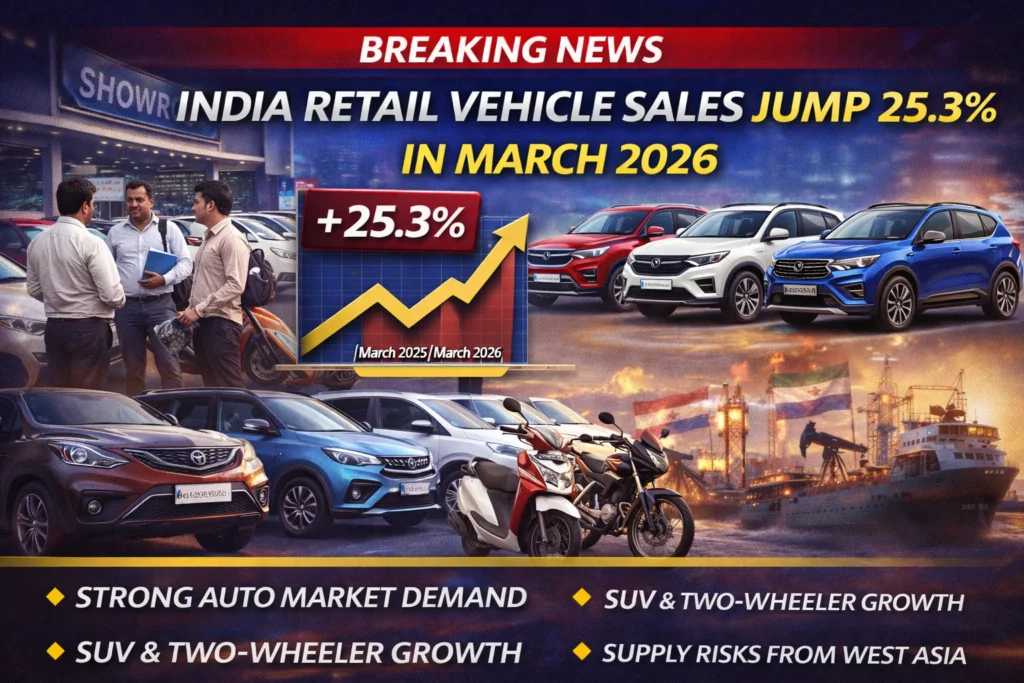
India retail vehicle sales jumped 25.3% in March 2026, reflecting strong consumer demand across passenger vehicles, two-wheelers, and commercial segments. The latest data highlights a robust recovery in the auto sector, driven by improved buyer sentiment, festive demand spillover, and strong SUV sales.
However, despite this impressive growth, dealers have raised concerns over potential supply chain disruptions linked to rising geopolitical tensions in West Asia, which could impact the market in the near term.
India Retail Vehicle Sales Jump 25.3% in March 2026 – Key Highlights
The surge in India retail vehicle sales was observed across multiple categories.
Major Takeaways:
- Overall growth: +25.3% YoY in March 2026
- Strong performance in passenger vehicles and two-wheelers
- Increased demand in both urban and rural markets
- Improved inventory movement at dealerships
This growth indicates that the Indian auto market is currently in a high momentum phase, supported by positive economic indicators.
Passenger Vehicles Lead the Growth
The passenger vehicle segment played a major role in driving the surge in India retail vehicle sales.
Growth Drivers:
- Rising demand for SUVs
- Increased preference for feature-rich vehicles
- Availability of finance options
Popular segments included:
- Compact SUVs (Nexon, Brezza, Venue)
- Mid-size SUVs (Creta, XUV700)
The shift toward SUVs continues to dominate the Indian automotive landscape.
Two-Wheelers and Rural Demand Bounce Back
The two-wheeler segment also saw strong growth, contributing significantly to the India retail vehicle sales jump.
Key Factors:
- Recovery in rural demand
- Better crop output and income levels
- Increased affordability
Entry-level motorcycles and scooters remained the backbone of this growth, especially in semi-urban and rural markets.
Dealers Flag West Asia Supply Risks
Despite strong sales numbers, dealers have expressed concerns over emerging supply-side risks linked to West Asia.
Potential Risks:
- Disruption in shipping routes
- Rising crude oil prices
- Delay in component supply
These factors could:
- Increase vehicle prices
- Impact production schedules
- Reduce dealer inventory availability
The situation is being closely monitored by automakers and dealers alike.
Commercial Vehicles & EV Segment Outlook
The commercial vehicle segment also showed signs of steady recovery, supported by:
- Infrastructure spending
- Logistics demand
- Economic activity
Meanwhile, EV adoption continues to grow gradually, although it still represents a smaller share of overall India retail vehicle sales.
What This Means for Buyers
For consumers, the current market scenario presents both opportunities and risks.
Opportunities:
✔ Wide range of new models available
✔ Attractive offers and discounts
✔ Faster deliveries (currently)
Risks:
⚠ Possible price hikes due to supply disruptions
⚠ Longer waiting periods if supply chain issues escalate
Industry Outlook for Coming Months
The India retail vehicle sales growth in March 2026 indicates strong momentum, but sustainability will depend on:
- Global geopolitical stability
- Supply chain resilience
- Fuel prices
- Interest rates
If supply disruptions intensify, the market could see short-term volatility despite strong demand fundamentals.
Final Verdict
The India retail vehicle sales jump of 25.3% in March 2026 reflects a thriving auto market driven by strong demand across segments.
However, the emerging risks related to West Asia supply chains could act as a near-term challenge.
For now, the Indian automotive sector remains on a strong growth trajectory, but the coming months will be crucial in determining whether this momentum can be sustained.