
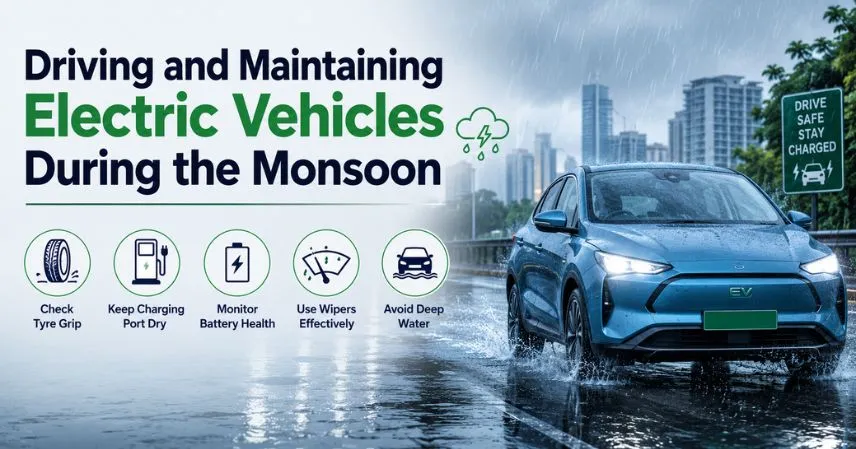
Electric vehicles are becoming increasingly common on Indian roads. From the Tata Nexon EV and MG Windsor EV to the Mahindra XEV 9e and BYD Seal, more buyers are switching to EVs because of their lower running costs, quiet driving experience, and environmental benefits.
However, one question continues to worry many buyers every monsoon season: Are electric vehicles safe in heavy rain and flooded roads?
The good news is that modern EVs are designed and tested to operate safely in wet weather conditions. Manufacturers subject their vehicles to extensive water-wading, high-pressure washing, and waterproofing tests before launch. That said, India’s monsoon conditions can be challenging. Cities like Mumbai, Bengaluru, Chennai, Gurugram, Kolkata, and Delhi-NCR often experience waterlogged roads, sudden flooding, high humidity, and poor visibility.
Knowing how to drive, charge, and maintain your electric vehicle during the rainy season can significantly improve safety, reliability, and battery longevity.
This comprehensive guide explains everything Indian EV owners need to know about driving and maintaining electric vehicles during the monsoon.
Are Electric Vehicles Safe To Drive In The Rain?
Yes. Modern electric vehicles are designed to operate safely in rainy conditions.
A common misconception is that EVs are more vulnerable to water because they use large battery packs and electrical systems. In reality, EV manufacturers invest heavily in waterproofing technology.
The battery pack, power electronics, motor, and charging systems are sealed and protected against water intrusion. Most EVs sold in India feature battery protection ratings such as IP67 or IP68.
This means they can withstand temporary exposure to water under specific conditions without damaging critical components.
If it is raining while you are driving, your EV is just as safe as a conventional petrol or diesel vehicle.
Understanding IP67 And IP68 Ratings
When shopping for an electric vehicle, you may come across terms such as IP67 and IP68.
These ratings indicate how well the battery and electrical components are protected from dust and water.
| Rating | Protection Level |
| IP67 | Protected against dust and temporary water immersion |
| IP68 | Protected against dust and deeper or longer water immersion |
| Higher Rating | Better protection from environmental conditions |
Many popular EVs sold in India use battery systems with IP67 or IP68 protection.
Examples include:
- Tata Nexon EV
- Tata Punch EV
- Mahindra BE 6
- Mahindra XEV 9e
- MG Windsor EV
- BYD Atto 3
- Hyundai Creta Electric
However, even vehicles with IP68 protection should not be driven intentionally through deep floodwater.
Why Monsoon Care Is Important For EV Owners
Indian monsoons create unique challenges for all vehicles, including EVs.
Common problems include:
- Flooded roads
- Standing water
- Mud accumulation
- High humidity
- Corrosion risks
- Reduced tire grip
- Poor visibility
While electric vehicles are built to handle rain, regular maintenance and sensible driving habits remain essential.
Ignoring monsoon-related care can lead to:
- Faster brake wear
- Connector contamination
- Reduced efficiency
- Rust formation
- Electrical warning lights
Proper care helps avoid expensive repairs and improves long-term reliability.
Protecting The Battery During The Monsoon
The battery pack is the most expensive component in an electric vehicle.
In many cases, it accounts for 30% to 40% of the vehicle’s total value.
Most modern battery packs are mounted beneath the vehicle floor and protected by strong metal casings and waterproof seals.
However, owners should still follow a few precautions.
Avoid Deep Flood Water
Never assume your EV can safely cross every flooded road.
If water levels appear above the wheel hubs or are difficult to judge, it is better to turn around and find another route.
Monitor Battery Health
Pay attention to:
- Unexpected range drops
- Charging issues
- Warning lights
- Strange sounds
These symptoms may indicate water-related problems that require professional inspection.
Keep The Underbody Clean
Mud and debris can collect underneath the vehicle during the monsoon.
Periodic cleaning helps maintain cooling efficiency and prevents long-term corrosion.
Safe EV Charging Practices During The Monsoon
One of the most common questions among new EV owners is:
Can I charge my electric car while it is raining?
The answer is yes.
Certified charging systems are designed to operate safely in wet conditions.
Modern charging connectors include multiple safety mechanisms that prevent electricity from flowing until a secure connection is established.
Follow These Charging Tips
✔ Use manufacturer-approved chargers
✔ Charge in covered areas whenever possible
✔ Inspect cables regularly
✔ Keep charging connectors clean
✔ Close charging port covers properly
Avoid These Mistakes
✘ Using damaged charging cables
✘ Using cheap aftermarket equipment
✘ Charging with exposed electrical sockets
✘ Using outdoor extension cords during rain
Does Rain Affect EV Driving Range?
Yes, but usually not dramatically.
Many EV owners notice a slight reduction in range during the monsoon.
This happens because:
- Air conditioning runs more frequently
- Windshield wipers consume power
- Wet roads increase rolling resistance
- Traffic congestion increases energy usage
Most drivers can expect range reductions between 5% and 15% depending on conditions. For example, if your EV normally delivers 400 km of real-world range, it may achieve 340–380 km during heavy monsoon usage.
How To Drive An EV Safely During Heavy Rain
Driving technique becomes especially important during the rainy season.
Reduce Speed
Wet roads reduce tire grip.
Slower speeds improve braking performance and vehicle control.
Increase Following Distance
Maintain a larger gap between vehicles.
Braking distances increase significantly on wet roads.
Avoid Sudden Inputs
Aggressive acceleration and steering movements can reduce traction.
Apply inputs smoothly.
Use Regenerative Braking Wisely
Many EVs offer strong regenerative braking.
In slippery conditions, moderate regeneration settings can help maintain stability.
Tire And Brake Maintenance During Monsoons
Tires and brakes are your first line of defense on wet roads.
Check Tire Tread Depth
Worn tires increase the risk of hydroplaning.
Replace tires that show excessive wear.
Maintain Correct Tire Pressure
Improper tire pressure affects:
- Handling
- Safety
- Efficiency
- Tire life
Check pressures regularly.
Use Friction Brakes Occasionally
EVs rely heavily on regenerative braking.
This means traditional brake components may be used less frequently.
Using the brake pedal periodically helps remove surface rust and maintain performance.
What Happens If Your EV Gets Submerged In Flood Water?
This is one of the most important concerns for Indian EV owners.
If flood water enters critical vehicle components, serious damage can occur.
If Your EV Enters Deep Water
- Stop safely.
- Move to higher ground if possible.
- Do not attempt charging.
- Switch off the vehicle.
- Contact roadside assistance.
- Arrange inspection at an authorized service center.
Never assume everything is fine simply because the vehicle still drives normally.
Hidden water damage can affect:
- Connectors
- Sensors
- Wiring harnesses
- Battery cooling systems
Best EV Features For Indian Monsoon Conditions
| Feature | Why It Matters |
| IP67/IP68 Battery Protection | Improved water resistance |
| High Ground Clearance | Better ability to handle waterlogged roads |
| ESC (Electronic Stability Control) | Improves wet-road safety |
| Advanced Thermal Management | Protects battery health |
| Connected Car Diagnostics | Early issue detection |
| Multiple Airbags | Improved overall safety |
Best Electric Vehicles For Monsoon Conditions In India
Tata Nexon EV
- Strong waterproofing
- High ground clearance
- Widely available service network
Tata Punch EV
- Compact dimensions
- SUV stance
- Practical for city use
Mahindra XEV 9e
- Advanced technology
- Premium safety package
- Long-range capability
Mahindra BE 6
- Modern architecture
- Strong battery protection
MG Windsor EV
- Comfortable cabin
- Good urban usability
Hyundai Creta Electric
- Balanced package
- Feature-rich interior
Smart Parking Tips During Monsoon Season
Where you park matters.
Choose Covered Parking
Covered parking protects:
- Charging ports
- Paintwork
- Electrical connectors
Avoid Waterlogged Areas
Even parked vehicles can suffer damage if floodwater rises unexpectedly.
Check Drainage
Ensure outdoor parking spots allow water to drain away efficiently.
Monsoon EV Maintenance Checklistinage
Weekly
- Inspect tires
- Clean charging port
- Check wiper blades
- Inspect exterior seals
Monthly
- Wash underbody
- Check brake performance
- Inspect suspension
- Verify software updates
After Flood Exposure
- Battery inspection
- Electrical system diagnostics
- Connector inspection
- Brake cleaning
Common Myths About EVs During The Monsoon
Myth: EVs Cannot Be Driven In Rain
Fact: Modern EVs are specifically engineered for wet-weather operation.
Myth: Charging During Rain Is Dangerous
Fact: Certified charging systems include extensive safety protections.
Myth: Rain Damages EV Batteries
Fact: Modern battery packs are sealed and waterproof.
Myth: EVs Are More Dangerous Than Petrol Cars In Floods
Fact: Any vehicle can suffer damage in deep floodwater. Sensible driving is the key.
Final Thoughts
Electric vehicles are well suited to Indian monsoon conditions when used responsibly.
Modern EVs feature sophisticated waterproofing, advanced battery protection, and robust safety systems that allow them to operate confidently in rain.
However, no vehicle is immune to extreme flooding.
The best approach is simple:
- Avoid deep water
- Charge safely
- Maintain tires and brakes
- Keep charging equipment clean
- Follow manufacturer maintenance schedules
With proper care, your electric vehicle can deliver reliable, safe, and efficient performance throughout the monsoon season.
FAQs
Is it safe to drive an electric car in heavy rain?
Yes. Modern EVs are tested extensively and are designed to operate safely in rainy conditions.
Can I charge my EV during rain?
Yes. Use certified charging equipment and ensure connectors are properly secured.
Does rain reduce EV range?
Yes. Most EVs experience a 5–15% range reduction during monsoon conditions.
What should I do if my EV enters flood water?
Stop safely, avoid charging the vehicle, and have it inspected by an authorized service center.
Which EV is best for monsoon driving in India?
Models such as the Tata Nexon EV, Tata Punch EV, Mahindra XEV 9e, and Hyundai Creta Electric are well suited to Indian monsoon conditions due to their safety features, ground clearance, and battery protection systems.