Quick Verdict
The Warivo Neo is designed for buyers who need an affordable electric scooter for short daily commutes, gated communities and neighbourhood errands rather than highway travel. Its biggest strengths are its ₹39,999 starting price, 250W motor and claimed range of up to 120 km, while its biggest limitation is the 25 km/h top speed, making it unsuitable for fast urban traffic. Best for students, senior citizens and low-speed city users. Not ideal for commuters who regularly travel long distances or need highway capability.
Key Highlights
✅ Motor: 250W BLDC hub motor designed for licence-free low-speed riding.
✅ Top Speed: Claimed 25 km/h, allowing operation without vehicle registration or driving licence under current regulations.
✅ Range: Manufacturer claims up to 120 km per charge depending on battery option and riding conditions.
✅ Battery Options: Available with Lead Acid and Lithium battery configurations.
✅ Brakes: Front disc brake with rear drum brake improves stopping confidence over drum-only rivals.
✅ Display: Fully digital instrument console with essential ride information.
✅ Tyres: Tubeless tyres mounted on alloy wheels for better puncture resistance.
✅ Price: Ex-showroom price starts from approximately ₹39,999, making it one of India's most affordable electric scooters.
Full Specifications
Engine & Performance
| Specification |
Details |
| Powertrain |
BLDC Hub Motor |
| Motor Output |
250W |
| Fuel Type |
Electric |
| Transmission |
Automatic |
| Starting System |
Push Button Start |
| Claimed Top Speed |
25 km/h |
| 0–60 km/h |
Not Applicable |
Battery & Range
| Specification |
Details |
| Battery Options |
Lead Acid / Lithium-ion |
| Claimed Range |
Up to 120 km/charge |
| Charging |
Standard Charger |
| Fast Charging |
Supported (manufacturer claim) |
| Estimated Real-World Range |
65–90 km (varies with battery, load and riding conditions) |
| Estimated Cost per Charge |
Approximately ₹8–15 depending on electricity tariff |
Real-world range is an estimate based on similar 250W low-speed electric scooters and typical Indian riding conditions.
Chassis & Dimensions
| Specification |
Details |
| Suspension Front |
Telescopic Fork |
| Suspension Rear |
Dual Shock Absorbers |
| Length |
1,800 mm |
| Width |
660 mm |
| Height |
1,100 mm |
| Kerb Weight (without battery) |
58.5 kg |
| Seat Height |
Around 740 mm |
| Wheelbase |
Not officially disclosed |
| Ground Clearance |
Not officially disclosed |
Brakes & Wheels
| Specification |
Details |
| Front Brake |
Disc |
| Rear Brake |
Drum |
| CBS |
Not specified |
| ABS |
No |
| Front Tyre |
90/100-10 Tubeless |
| Rear Tyre |
90/100-10 Tubeless |
| Wheels |
Alloy |
Features & Electronics
| Feature |
Availability |
| Digital Instrument Cluster |
Yes |
| LED Headlamp |
Yes |
| DRLs |
Yes |
| USB Charging |
Not officially specified |
| Bluetooth Connectivity |
No |
| Mobile App |
No |
| Low Battery Alert |
Yes |
| Charging Point |
Yes |
| Clock |
Yes |
| Trip Meter |
Digital |
Variants & Pricing
| Variant |
Ex-showroom Price (Delhi) |
Key Features |
| Neo STD |
₹39,999 |
250W motor, digital console, front disc brake, alloy wheels, tubeless tyres |
Prices may vary depending on city, battery type and dealership.
Design and Build Quality
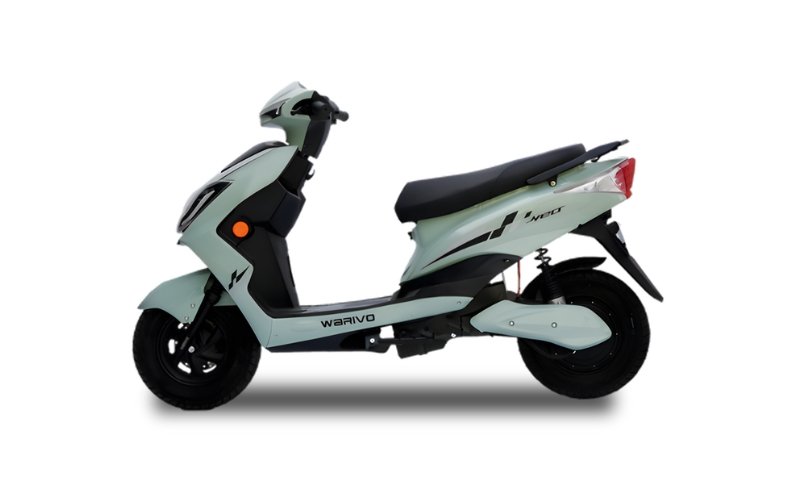
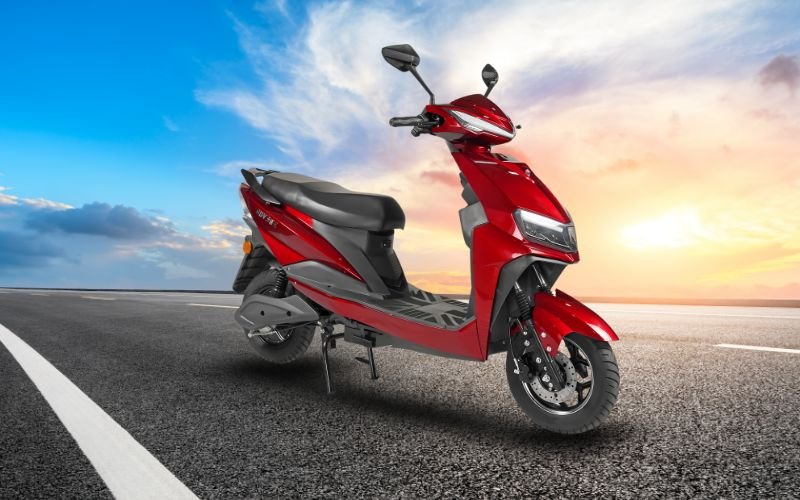
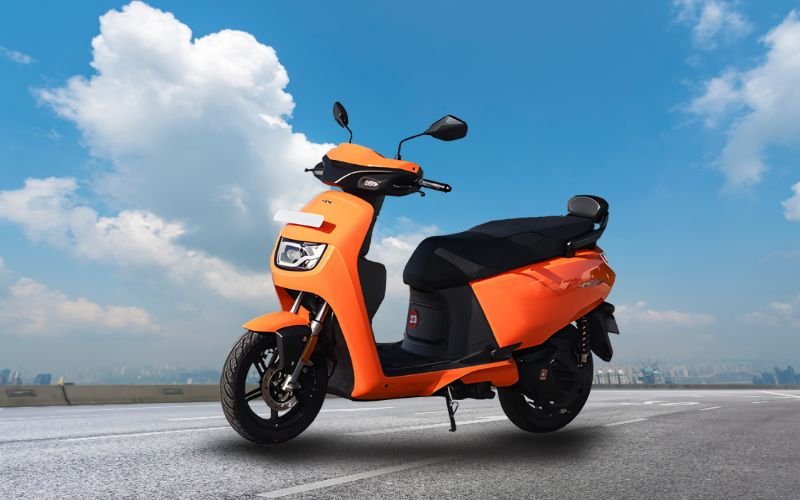
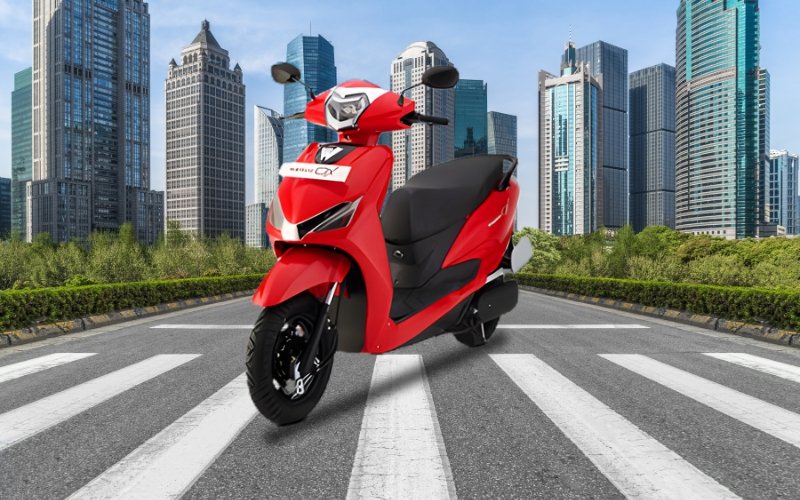
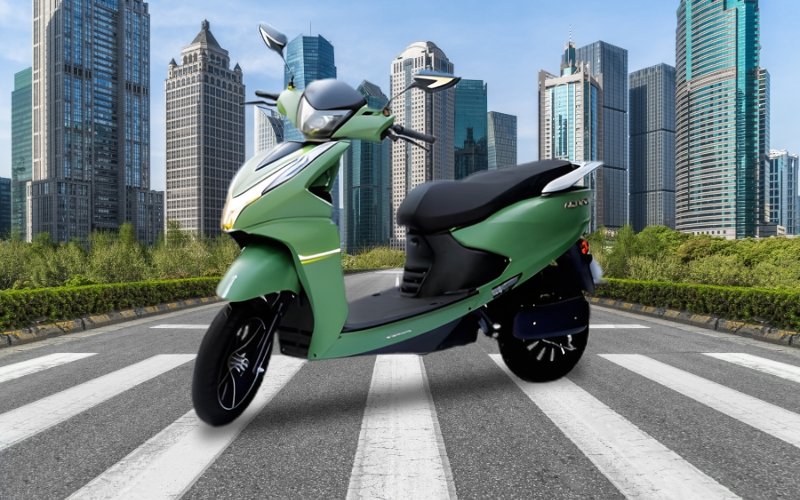
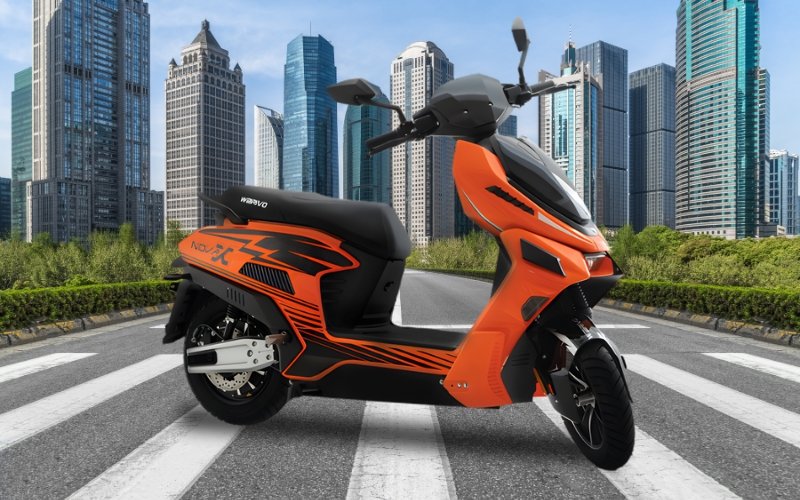
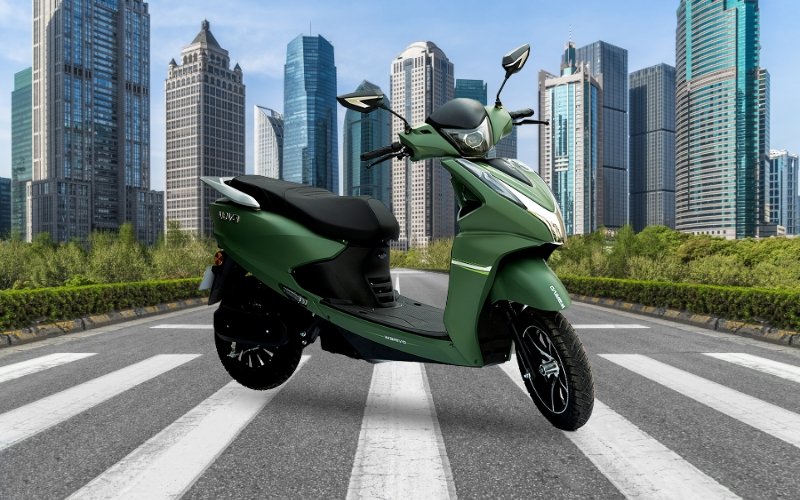
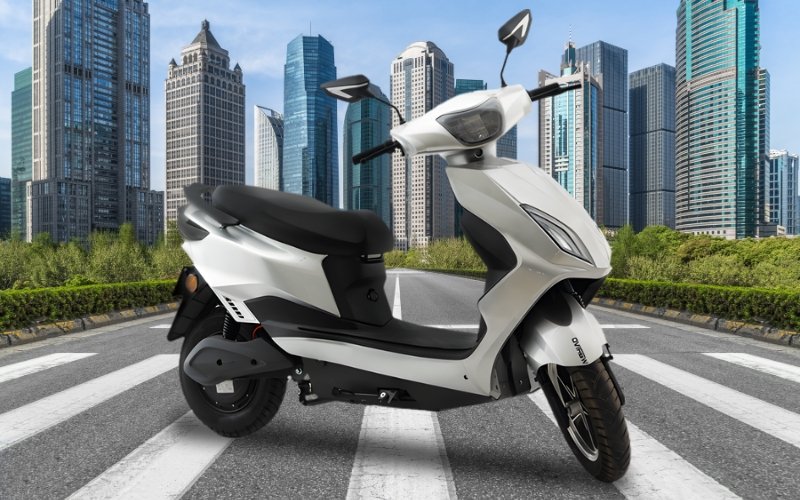
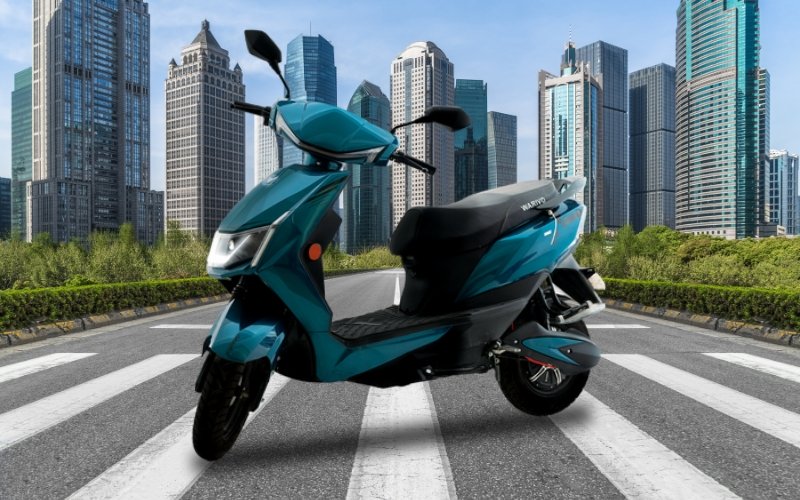
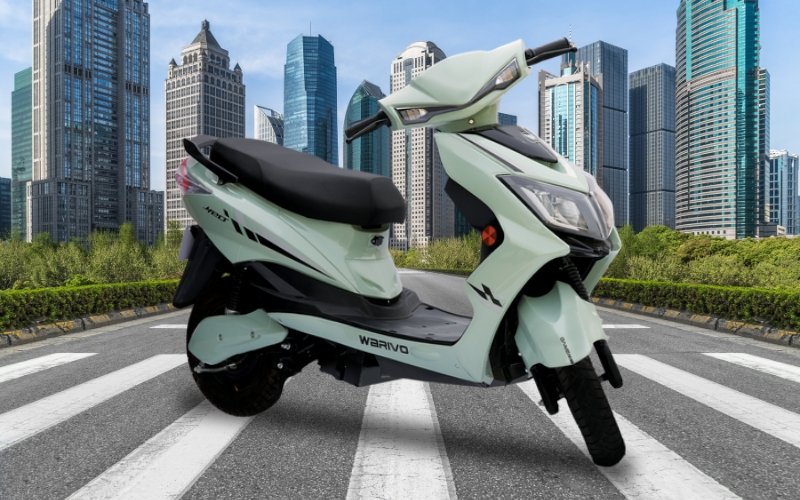
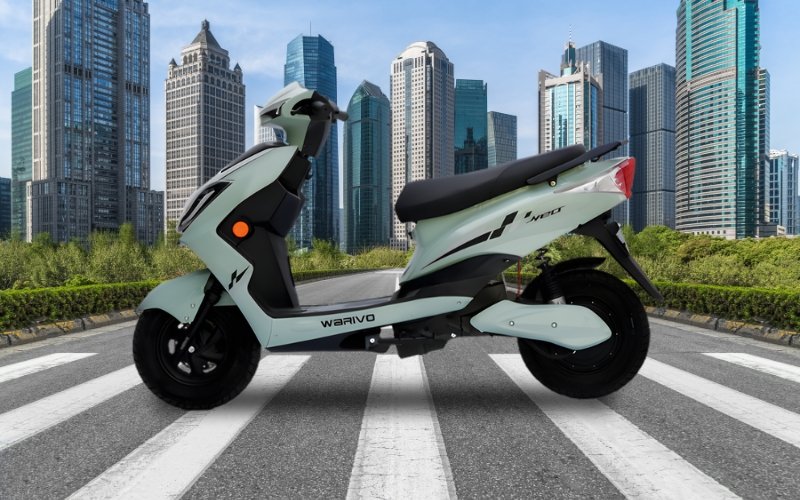
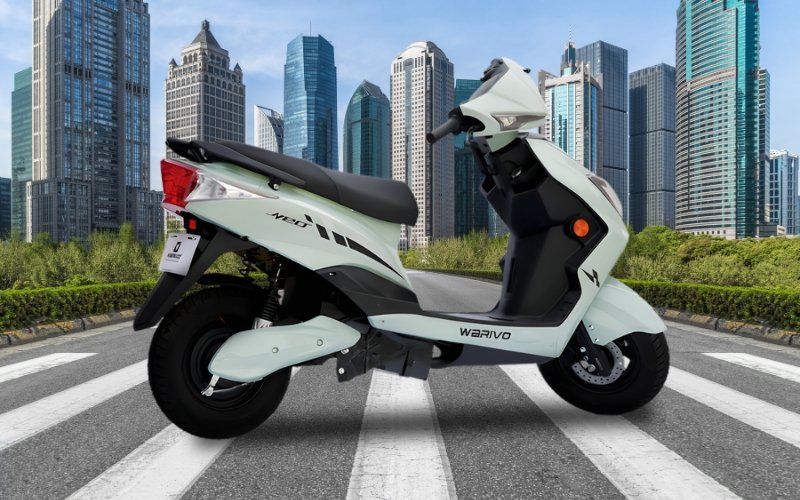
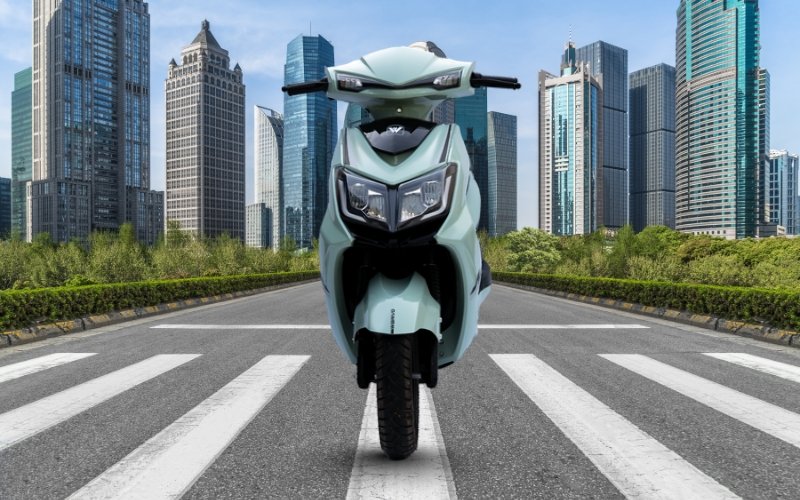
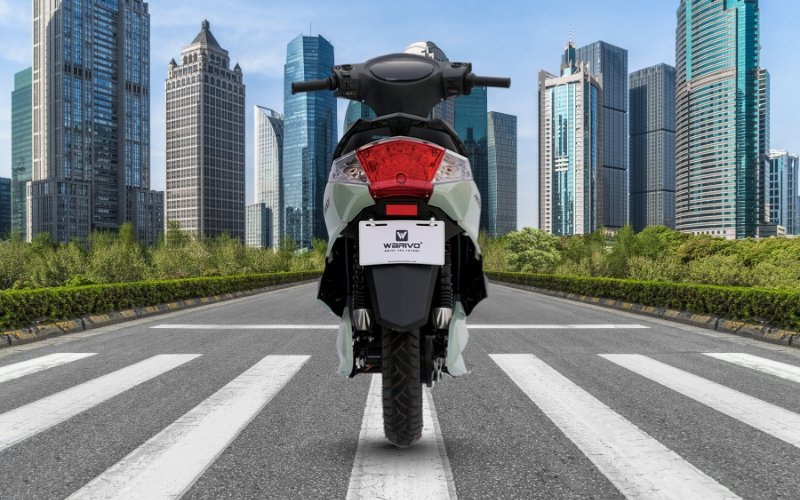
The Warivo Neo adopts a familiar family-scooter design with clean body panels, LED lighting and compact dimensions. Rather than chasing sporty styling, the focus is clearly on practicality and affordability. At 1,800 mm long and 660 mm wide, it remains easy to manoeuvre through narrow residential streets and crowded markets. The company currently showcases multiple colour options including Teal, Red and Grey, giving buyers some visual choice despite the scooter's budget positioning.
Panel quality appears acceptable for the price, although buyers should not expect the premium finish seen on established electric scooters from TVS, Bajaj or Ather. The switchgear is simple and easy to understand, making it friendly for first-time EV users and senior citizens. The digital instrument cluster provides essential information such as speed, battery level and trip data without unnecessary complexity.
Practicality remains one of the Neo's strongest areas. The flat floorboard makes it convenient to carry grocery bags or small luggage, while the grab rail is positioned for easy pillion access. At just 58.5 kg (without battery), the scooter feels notably lighter than many high-speed electric scooters, making parking and low-speed handling considerably easier.
Engine and Performance
The Warivo Neo is powered by a 250W BLDC hub motor, placing it firmly in the low-speed electric scooter category. Its claimed top speed of 25 km/h means it is intended for neighbourhood mobility rather than conventional city commuting. Because it stays within India's low-speed EV regulations, it generally does not require vehicle registration or a driving licence, making it attractive to younger riders, senior citizens and first-time EV owners.
In real-world conditions, acceleration is gentle rather than brisk. From a standstill, the scooter builds speed progressively, which suits relaxed city riding and improves rider confidence. Overtaking opportunities are naturally limited because of the capped top speed, and riders should avoid roads where traffic routinely moves above 40 km/h.
Motor refinement is one of the positives. Electric power delivery is smooth, silent and vibration-free, eliminating the engine noise associated with petrol scooters. Heat generation is minimal during normal urban use, while automatic transmission operation keeps the riding experience simple.
The Neo performs best on short urban trips of 5–20 km, apartment complexes, campuses, industrial townships and local shopping runs. Buyers expecting highway performance or rapid acceleration should instead consider higher-powered electric scooters with 2–4 kW motors.
Ride Quality and Handling
The Warivo Neo uses a telescopic front suspension paired with dual rear shock absorbers, a conventional setup found on most entry-level scooters. For everyday commuting over typical Indian city roads, the suspension delivers acceptable comfort. Speed breakers, patched roads and minor potholes are absorbed reasonably well when ridden within the scooter's intended 25 km/h operating range.
Its biggest handling advantage comes from its low weight. At only 58.5 kg without the battery, the Neo feels unintimidating for beginners, senior riders and those upgrading from bicycles or e-rickshaws. U-turns require little effort, while navigating through congested markets or narrow residential lanes is straightforward.
The 90/100-10 tubeless tyres provide adequate grip for everyday riding, and the inclusion of a front disc brake is a welcome upgrade over several similarly priced rivals that rely solely on drum brakes. Braking performance remains predictable within the scooter's speed limits, although there is no ABS.
Long-distance comfort is naturally limited because of the scooter's low-speed nature. Riders travelling beyond 20–30 km in a single stretch may find the journey time considerably longer than on conventional scooters. Within its intended urban environment, however, the Neo offers a relaxed, easy-to-ride experience that prioritises accessibility over outright performance.
Fuel Efficiency — Real World
The Warivo Neo is an electric scooter, so traditional fuel efficiency figures in kmpl do not apply. Instead, buyers should focus on range per charge and the cost of electricity needed to recharge the battery. Warivo claims a maximum riding range of up to 120 km on a full charge, although this figure is achieved under ideal test conditions with the higher-capacity battery option.
In practical Indian riding conditions, real-world figures are likely to vary depending on the battery type, rider weight, road conditions and riding style. For the Lithium-ion variant, owners can realistically expect around 80–90 km per charge during mixed city use, while the Lead Acid version is more likely to deliver 65–75 km. Riding with a pillion, frequent stops or climbing flyovers will reduce the achievable range.
Charging costs remain one of the Neo's biggest strengths. Assuming an average domestic electricity tariff of ₹7–10 per unit, a full recharge typically costs ₹8–15, depending on battery capacity. That translates to a running cost of roughly 10–20 paise per kilometre, significantly lower than petrol scooters that usually cost ₹1.8–2.2 per kilometre at current fuel prices.
For buyers covering 15–30 km daily, the Neo can comfortably handle several days of commuting before requiring another recharge. Those consistently riding close to the claimed maximum range should remember that real-world conditions rarely match laboratory testing.
Features and Technology
The Warivo Neo keeps its feature list simple, focusing on everyday usability rather than advanced connected technology. The scooter comes with a fully digital instrument console, which displays speed, battery level, trip information and other essential ride data in a clean layout. While it lacks colourful TFT graphics, the display is easy to read during daytime riding.
Lighting is entirely LED, including the headlamp and daytime running lights, improving visibility while consuming less battery power than conventional halogen units. The scooter also features alloy wheels, tubeless tyres, a front disc brake, and an automatic transmission that makes it extremely easy for beginners to ride.
Where the Neo falls behind more expensive rivals is connected technology. There is no Bluetooth connectivity, no smartphone application, no navigation support, no call or SMS alerts, and no over-the-air software updates. Buyers looking for smart features will find stronger packages on scooters such as the TVS iQube, Bajaj Chetak and Ola S1 series, although those models cost substantially more.
From a value perspective, the Neo includes the essentials expected in its price bracket. Rather than adding flashy electronics, Warivo has prioritised affordability and low maintenance, which aligns with the scooter's intended audience of first-time EV buyers and short-distance commuters.
Comfort and Ergonomics
Comfort is one of the Warivo Neo's stronger points for urban use. Its relatively low seat height of around 740 mm makes it accessible to riders of varying heights, including many first-time users and senior citizens. Most riders can comfortably place both feet on the ground while stationary, improving confidence in traffic.
The riding posture is upright, with naturally positioned handlebars and a flat floorboard that provides sufficient legroom for daily commuting. Riders between 5 ft 2 in and 5 ft 10 in should find the ergonomics comfortable for short journeys around town.
The seat cushioning is adequate for commutes lasting 20–30 minutes, although longer rides may reveal its budget-oriented construction. Pillion accommodation is acceptable for neighbourhood trips, helped by a sturdy rear grab rail that makes mounting and dismounting easier.
Thanks to the scooter's light overall weight, steering effort remains minimal at parking speeds. This makes the Neo particularly suitable for elderly riders, women riders and anyone seeking an uncomplicated mobility solution. While it cannot match premium scooters for seat cushioning or highway comfort, it performs well within its intended role as a practical city commuter.
Boot Space and Practicality
Practicality is a major reason buyers consider low-speed electric scooters, and the Warivo Neo delivers a user-friendly ownership experience despite its compact dimensions. The flat floorboard provides useful space for shopping bags, backpacks or small parcels during everyday commuting.
Warivo has not officially disclosed the under-seat storage capacity in litres, so buyers should not expect the generous boot space found in larger premium electric scooters. Based on the battery placement and overall scooter dimensions, the storage area is best suited for carrying a raincoat, charger, small handbag or essential documents rather than a full-face helmet.
The integrated rear grab rail improves convenience when carrying a pillion, while the lightweight design makes parking inside apartment complexes and narrow residential spaces effortless.
For grocery shopping, medicine pickups, college commuting or office runs within the city, the Neo offers sufficient practicality. Buyers who frequently carry larger luggage or need to store a helmet under the seat may find better alternatives in higher-priced family scooters with larger storage compartments.
Variants — Which One to Buy
The Warivo Neo is currently offered primarily in a single standard variant, with buyers choosing between Lead Acid and Lithium-ion battery options depending on budget and usage.
Neo Lead Acid
This version offers the lowest purchase price and is ideal for buyers with very short daily commutes. It suits neighbourhood travel, gated communities and occasional shopping trips. However, the battery is heavier, charging takes longer and long-term replacement costs may be higher.
Neo Lithium-ion
The Lithium-ion version is the better long-term choice despite its higher initial price. It generally offers better efficiency, lower weight, faster charging and improved battery lifespan. Riders travelling 20–40 km daily will benefit from the extra convenience and potentially lower maintenance costs.
Which Variant Should You Buy?
If your budget allows, the Lithium-ion variant is the recommended choice. The better battery technology improves day-to-day usability and ownership experience while offering greater value over several years of use. Buyers with extremely limited budgets who ride less than 15 km daily can still consider the Lead Acid version.
Warivo Neo vs Competitors
The Warivo Neo competes with several entry-level low-speed electric scooters in India. Its primary rivals include the Avon E Scoot 504, Ujaas eGo LA, and Komaki XGT KM.
| Scooter |
Approx. Price (Ex-showroom) |
Claimed Range |
Top Speed |
Key Advantage |
| Warivo Neo |
₹39,999 onwards |
Up to 120 km |
25 km/h |
Front disc brake, attractive pricing |
| Avon E Scoot 504 |
₹49,000 onwards |
Up to 65 km |
24 km/h |
Established brand presence |
| Ujaas eGo LA |
₹40,000 onwards |
Up to 75 km |
25 km/h |
Simple maintenance |
| Komaki XGT KM |
₹56,000 onwards |
Up to 85 km |
25 km/h |
Better feature list |
Price
The Warivo Neo is among the most affordable options in this segment, undercutting many rivals by ₹5,000–15,000, depending on the battery configuration.
Range
Warivo's claimed 120 km range is competitive on paper, although real-world performance should be evaluated based on battery type and riding conditions.
Features
The inclusion of a front disc brake, LED lighting and a digital display gives the Neo an advantage over several similarly priced low-speed scooters.
Who Should Buy Which?
- Choose the Warivo Neo if affordability and low running costs are your priorities.
- Choose the Avon E Scoot 504 if you prefer a more established dealership network.
- Choose the Komaki XGT KM if you want additional convenience features and are willing to spend more.
- Choose the Ujaas eGo LA if simple city commuting is your only requirement.
Pros and Cons
PROS
- Affordable purchase price: Starting around ₹39,999, it is among India's most accessible electric scooters.
- No licence or registration required: The 25 km/h top speed qualifies it as a low-speed EV under current regulations.
- Very low running costs: Electricity costs are only around 10–20 paise per kilometre, making daily commuting economical.
- Lightweight construction: Around 58.5 kg without the battery makes parking and manoeuvring easy.
- Front disc brake: Provides better braking confidence than many budget rivals that use drum brakes at both ends.
CONS
- Limited top speed: The 25 km/h speed cap makes it unsuitable for fast city traffic or highways.
- Basic feature list: No Bluetooth connectivity, navigation or smartphone integration.
- Unknown service reach: Warivo's dealership and service network is still much smaller than major brands like TVS or Bajaj.
- Under-seat storage is limited: Buyers needing space for a full-face helmet may be disappointed.
Verdict — Should You Buy It?
The Warivo Neo delivers exactly what its specification sheet promises—an affordable, licence-free electric scooter built for short-distance urban mobility. It is not designed to compete with high-performance electric scooters but instead targets buyers looking for a practical, economical alternative to bicycles or petrol-powered commuters.
Buy it if you are...
- A college student with short daily travel.
- A senior citizen looking for simple local mobility.
- A family needing a second scooter for neighbourhood errands.
- A commuter covering 15–30 km each day with access to home charging.
Skip it if you are...
- Regularly travelling on highways or major city roads.
- Expecting speeds above 25 km/h.
- Looking for Bluetooth connectivity, navigation or premium technology.
- Carrying heavy luggage or riding long distances frequently.
Wait if you are...
- Unsure whether you need a low-speed or high-speed electric scooter.
- Planning to increase your daily commute beyond 40–50 km.
- Prioritising an extensive nationwide service network over the lowest purchase price.
Overall Verdict
The Warivo Neo is a sensible choice for buyers seeking an affordable, licence-free electric scooter for short urban journeys. If your commuting needs match its low-speed design, it offers low running costs, simple operation and good everyday practicality. However, riders requiring higher speeds, longer distances or advanced features will be better served by stepping up to a high-speed electric scooter from a more established manufacturer.