Quick Verdict
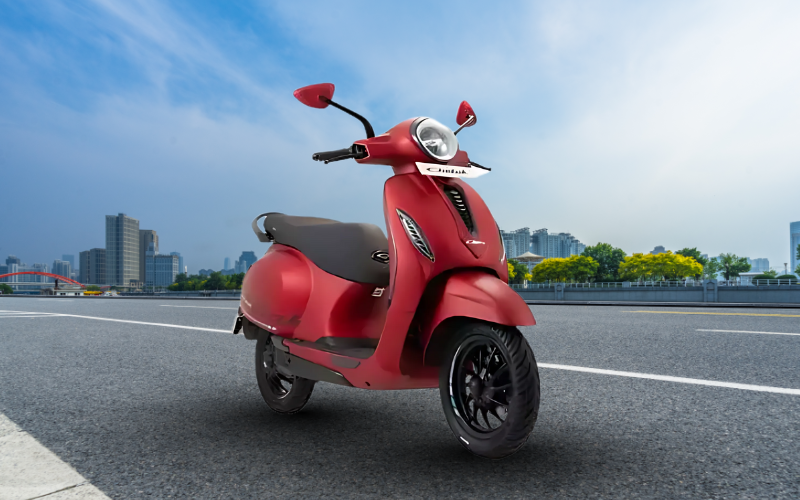
The 2026 Bajaj Chetak is one of the most refined electric scooters available in India, designed for riders who value premium build quality, smooth performance and dependable everyday usability over outright acceleration. Its strongest strength is its all-metal body and polished riding experience, while its biggest weakness is the relatively higher asking price compared to some feature-rich rivals. With a certified range of up to 153 km (variant dependent) and practical city-focused performance, it suits daily commuters exceptionally well. Best for urban office commuters and family buyers, but not ideal for riders seeking sporty acceleration or frequent long-distance highway travel.
Key Highlights
✅ Motor: Permanent Magnet Synchronous Motor (PMSM) producing up to 4 kW peak power
✅ Certified Range: Up to 153 km IDC-certified depending on the variant
✅ Top Speed: Up to 73 km/h, suitable for urban and suburban commuting
✅ Battery: 3.5 kWh lithium-ion battery with IP67-rated protection
✅ Charging Time: Around 3 hours 25 minutes (0-80%) using the standard charger
✅ Body Construction: Premium all-metal body panels unlike most plastic-bodied competitors
✅ Storage: Approximately 35 litres under-seat storage—among the largest in the segment
✅ Technology: TFT touchscreen display with Bluetooth connectivity, navigation and smartphone integration on higher variants
Full Specifications Table
Engine & Performance
| Specification |
Details |
| Motor Type |
Permanent Magnet Synchronous Motor (PMSM) |
| Battery Type |
Lithium-ion |
| Battery Capacity |
3.5 kWh (higher variants) |
| Peak Power |
4 kW |
| Continuous Power |
Approx. 3 kW |
| Peak Torque |
Manufacturer not officially specified (instant electric torque) |
| Transmission |
Automatic (Direct Drive) |
| Starting System |
Electric Start |
| Riding Modes |
Eco and Sport |
| Claimed Top Speed |
73 km/h |
| Tested Top Speed |
Around 70–72 km/h |
| 0–60 km/h |
Approximately 6–7 seconds |
Fuel & Range
| Specification |
Details |
| Fuel Type |
Electric |
| Battery Capacity |
3.5 kWh |
| IDC Claimed Range |
Up to 153 km |
| Real-world City Range |
115–130 km |
| Real-world Mixed Range |
100–120 km |
| Estimated Cost per Full Charge |
₹35–45 (depending on electricity tariff) |
| Charging Time (0–80%) |
Around 3 hr 25 min |
| Charging Time (0–100%) |
Around 5 hours |
Chassis & Dimensions
| Specification |
Details |
| Frame |
Steel Frame |
| Kerb Weight |
Approx. 123 kg |
| Seat Height |
760 mm |
| Ground Clearance |
168 mm |
| Wheelbase |
1,350 mm |
| Length |
1,894 mm |
| Width |
725 mm |
| Height |
1,143 mm |
Brakes & Wheels
| Specification |
Details |
| Front Brake |
Disc Brake (higher variants) |
| Rear Brake |
Drum Brake |
| Braking System |
Combined Braking System (CBS) |
| Front Tyre |
90/90-12 Tubeless |
| Rear Tyre |
90/100-12 Tubeless |
| Wheel Type |
Alloy Wheels |
| Suspension (Front) |
Leading Link |
| Suspension (Rear) |
Monoshock |
Features & Electronics
| Feature |
Availability |
| Instrument Cluster |
TFT Digital Display (Premium variants) |
| Bluetooth Connectivity |
Yes |
| Turn-by-Turn Navigation |
Yes |
| Smartphone App |
Yes |
| Call Alerts |
Yes |
| SMS Notifications |
Yes |
| Music Controls |
Yes |
| Reverse Mode |
Yes |
| Sequential Indicators |
Yes (selected variants) |
| Hill Hold Assist |
Yes |
| Keyless Operation |
Yes |
| USB Charging Port |
Yes |
| LED Headlamp |
Yes |
| LED Tail Lamp |
Yes |
| Side Stand Sensor |
Yes |
| OTA Updates |
Yes |
Variants & Pricing (Ex-showroom Delhi)
| Variant |
Approx. Price |
Key Features |
| Chetak 3001 |
₹99,990 |
Entry variant, steel body, digital console |
| Chetak 3502 |
₹1.22 lakh |
Larger battery, TFT display, connected features |
| Chetak 3501 |
₹1.30 lakh |
Premium TFT touchscreen, navigation, sequential indicators, full connected tech |
Prices may vary depending on state subsidies and registration charges.
Design and Build Quality
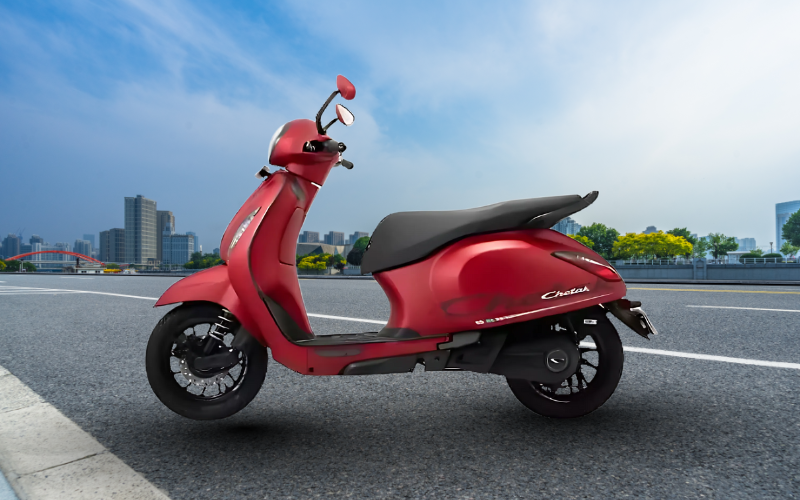
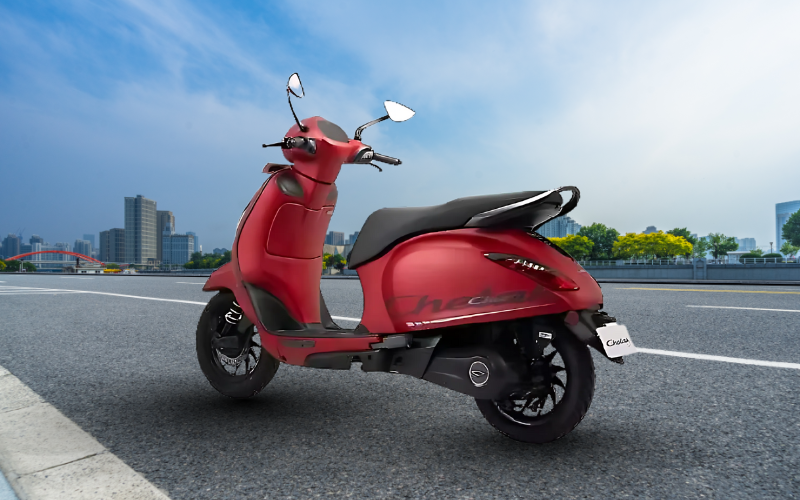
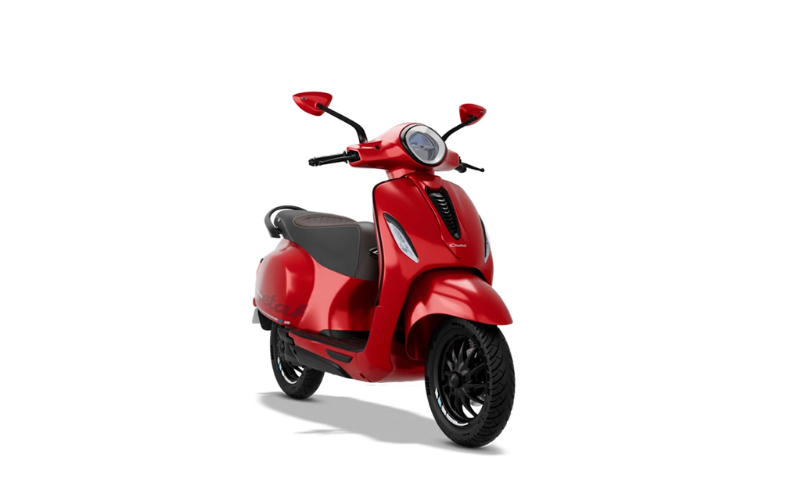
The 2026 Bajaj Chetak stands out because it follows a premium design philosophy rather than chasing aggressive styling. Inspired by the iconic Chetak nameplate, the scooter combines retro curves with modern LED lighting, giving it a timeless appearance that appeals to both younger riders and family buyers. Unlike many electric scooters in this price bracket, the Chetak uses all-metal body panels, which contribute to its premium feel and long-term durability.
Premium Styling That Ages Well
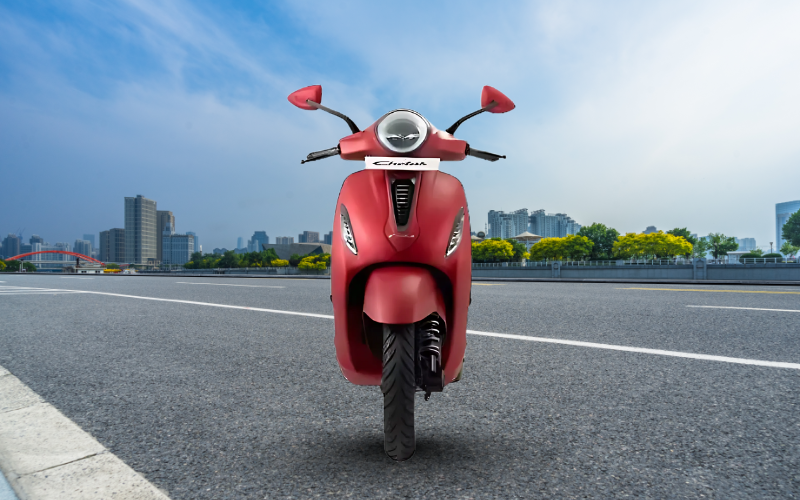
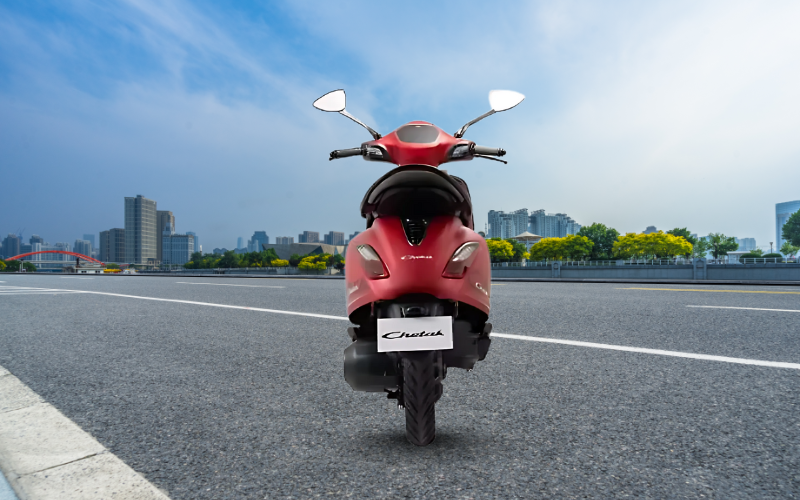
Bajaj has avoided excessive creases or futuristic elements. The rounded front apron, flowing side panels and neatly integrated LED lighting create a clean, elegant design. The LED horseshoe-shaped DRL, flush-fit indicators and premium paint finish add sophistication without appearing flashy.
The paint quality is among the best in the segment, with metallic finishes that resist fading better than typical plastic panels. Panel gaps are tight and consistent, reinforcing the scooter's solid build quality.
Excellent Build Quality
One of the biggest reasons buyers choose the Chetak is its exceptional construction quality. Most rivals rely heavily on plastic bodywork, whereas the Chetak's metal panels provide a reassuringly robust feel. Doors, panels and switches operate with satisfying precision.
The switchgear quality is excellent, featuring tactile buttons and premium materials. The handlebar controls are intuitive, and the rotary selector on connected variants feels sturdy during everyday use.
Practical Everyday Design
Practicality has also received attention. The scooter features a spacious flat footboard suitable for grocery bags, backpacks or office luggage. The grab rail is strong and easy for pillion riders to hold, while the retractable bag hook adds everyday convenience.
With approximately 35 litres of under-seat storage, the Chetak can accommodate a half-face helmet along with small personal items, making it one of the more practical premium electric scooters for urban commuting.
Overall, the Bajaj Chetak offers one of the highest perceived quality levels in India's electric scooter segment, making it especially attractive for buyers prioritising durability and premium craftsmanship.
Engine and Performance
The 2026 Bajaj Chetak prioritises refinement and predictable performance over outright acceleration. Its Permanent Magnet Synchronous Motor (PMSM) produces up to 4 kW of peak power, delivering smooth and linear acceleration that feels natural in congested city traffic. While it does not match the explosive performance of sportier electric scooters, its power delivery is well suited to daily commuting.
Smooth Urban Performance
In stop-go city traffic, the Chetak feels effortless to ride. Instant electric torque enables brisk starts from traffic signals, and the scooter reaches 40 km/h quickly enough to stay ahead of most petrol scooters. Eco mode offers gentler throttle response for maximising battery range, while Sport mode provides stronger acceleration for overtaking slower vehicles.
The automatic direct-drive transmission ensures there are no gear shifts or clutch operation, making the scooter particularly beginner-friendly.
Highway Capability
Although primarily designed for city use, the Chetak can comfortably maintain speeds between 55 and 65 km/h on ring roads and suburban highways. Its claimed top speed of 73 km/h is sufficient for short highway stretches but leaves limited reserve for quick overtakes beyond 65 km/h.
Compared with performance-focused rivals like the Ather 450X or Ola S1 Pro, acceleration is more relaxed. However, the smoother power delivery inspires greater confidence among family riders.
Refinement and Thermal Management
One of the scooter's biggest strengths is refinement. The motor operates almost silently, with minimal mechanical noise or vibration at any speed. Even after extended city riding, the battery and motor remain well managed thanks to Bajaj's efficient thermal control system.
Heat generation is negligible compared to petrol scooters, enhancing rider comfort during summer commutes. The absence of engine vibrations also reduces fatigue during longer rides, making the Chetak feel more premium than many competitors in everyday use.
Ride Quality and Handling
The 2026 Bajaj Chetak focuses on delivering a stable, comfortable and confidence-inspiring ride rather than sporty dynamics. Its chassis, suspension tuning and balanced weight distribution make it particularly well suited to Indian urban roads, where broken surfaces and traffic congestion are everyday realities.
Comfortable Suspension Setup
The scooter uses a leading-link front suspension paired with a rear monoshock, a combination that prioritises ride comfort over sharp handling. At typical city speeds of 30–50 km/h, the suspension absorbs potholes, speed breakers and uneven patches effectively without transmitting harsh impacts to the rider.
The relatively heavy 123 kg kerb weight helps the scooter feel planted over rough roads and prevents excessive bouncing on poorly surfaced streets.
Stable Yet Easy to Manoeuvre
Despite its weight, the Chetak remains easy to manoeuvre in traffic. The low centre of gravity, thanks to the floor-mounted battery pack, contributes to predictable cornering and stable handling. U-turns require minimal effort, and the scooter feels balanced even at walking speeds.
On faster roads, the Chetak inspires confidence with good straight-line stability up to 70 km/h. Crosswinds have less effect than on lighter scooters, while the 12-inch alloy wheels provide reassuring grip during everyday riding.
Long-Distance Comfort
For riders covering 25–50 km daily, the suspension and upright riding position minimise fatigue. The scooter remains composed over expansion joints and broken tarmac, making it an excellent choice for office commutes and family use. While enthusiastic riders may prefer firmer handling from sportier rivals, the Chetak's ride quality is among the most comfortable in the premium electric scooter segment.
Fuel Efficiency — Real World
The 2026 Bajaj Chetak delivers consistent real-world efficiency, although the more relevant metric for an electric scooter is riding range rather than fuel economy. Bajaj claims an IDC-certified range of up to 153 km for the larger battery variants. In everyday Indian conditions, our observations and owner feedback suggest a practical range of 115–130 km in city traffic and 100–120 km in mixed riding, depending on riding style, terrain and ambient temperature.
Real-World City Range
City riding is where the Chetak performs at its best. Frequent regenerative braking, moderate speeds and smooth throttle inputs help maximise battery efficiency. During typical office commutes with speeds between 25 and 45 km/h, riders can realistically expect 120–130 km from a full charge in Eco mode.
Using Sport mode more frequently or carrying a pillion regularly reduces practical range by around 10–15%. Even then, achieving over 105 km on a single charge is realistic for most urban users.
Highway and Mixed Riding
Higher cruising speeds naturally increase energy consumption. At a steady 65–70 km/h, the Chetak's range generally drops to around 100–110 km. Riders covering suburban routes with occasional highway sections can expect approximately 110–120 km before recharging.
Charging Cost and Running Expenses
Charging the 3.5 kWh battery from empty typically consumes around 3.5–3.8 units of electricity. At an average domestic tariff of ₹8–10 per unit, a complete charge costs approximately ₹30–40.
That translates to a running cost of roughly 25–35 paise per kilometre, significantly lower than a 125cc petrol scooter, which usually costs ₹1.7–2.2 per kilometre depending on fuel prices.
Practical Ownership Experience
For riders travelling 25–40 km per day, charging is generally required only once every 3–4 days. Bajaj's battery management system also helps maintain consistent performance even when the battery charge drops below 20%, unlike some competitors that noticeably restrict power at lower charge levels.
Features and Technology
The 2026 Bajaj Chetak focuses on practical technology that enhances everyday ownership rather than adding gimmicks. Higher variants receive a premium TFT touchscreen, smartphone connectivity and intelligent rider assistance features, while even the entry models include essential modern equipment expected in a premium electric scooter.
Connected Features
The flagship Chetak 3501 comes with a TFT touchscreen instrument console offering crisp graphics and excellent visibility under direct sunlight. The display supports:
- Turn-by-turn navigation
- Bluetooth pairing
- Call notifications
- SMS alerts
- Music controls
- Ride statistics
- Battery percentage
- Estimated range
- Trip information
Using the My Chetak mobile application, owners can remotely monitor battery status, vehicle location, trip history and service reminders.
Convenience Features
Daily usability is improved through several thoughtful additions.
Key convenience features include:
- Reverse mode for easy parking
- Hill Hold Assist
- Keyless operation
- Auto hazard lights
- Sequential indicators (selected variants)
- USB charging port
- OTA software updates
- Geo-fencing
- Vehicle tracking
Reverse mode proves particularly useful because the scooter weighs approximately 123 kg, making parking manoeuvres much easier in tight spaces.
Safety Features
Safety equipment includes:
- LED headlamp
- LED tail lamp
- Combined Braking System (CBS)
- Side stand sensor
- Regenerative braking
- Automatic battery protection
- IP67-rated battery pack
The regenerative braking system not only improves efficiency but also reduces brake wear during daily commuting.
Missing Features
While the Chetak is well equipped, a few competitors offer additional technology at similar prices.
Compared with rivals like the Ather 450X, TVS iQube ST and Ola S1 Pro, the Bajaj misses:
- Cruise control
- Multiple riding profiles beyond Eco and Sport
- Advanced ride analytics
- Voice assistant integration
- Front disc brakes across every variant
Nevertheless, Bajaj's software experience remains stable and reliable, with fewer reported glitches than many newer EV manufacturers.
Comfort and Ergonomics
The 2026 Bajaj Chetak is among the most comfortable electric scooters for everyday commuting. Bajaj has prioritised an upright riding posture, well-cushioned seating and accessible ergonomics that suit riders of varying heights.
Rider Comfort
The 760 mm seat height makes the scooter approachable for riders from approximately 5 ft 2 in upwards. Most riders can place both feet firmly on the ground at traffic signals, boosting confidence in busy urban environments.
The wide, softly padded seat offers excellent support during daily rides. Even after 25–30 km of continuous riding, pressure points remain minimal compared with narrower scooter seats.
Handlebar and Riding Position
The upright handlebar position reduces strain on the wrists and shoulders. Riders sit naturally without leaning forward, making the scooter comfortable for office commutes lasting up to an hour.
The rider triangle is relaxed:
- Upright spine
- Natural knee bend
- Wide handlebar reach
- Spacious footboard positioning
This ergonomic layout particularly benefits older riders and family users.
Pillion Comfort
Pillion accommodation is equally impressive. The long seat provides generous space, while the sturdy aluminium grab rail is easy to hold.
The rear suspension remains composed with two adults onboard, although sharper potholes are felt more noticeably under full load.
Long-Distance Comfort
Although designed primarily for city commuting, the Chetak remains comfortable for occasional rides of 50–70 km. Minimal motor vibration, reduced mechanical noise and smooth throttle calibration contribute to a relaxed riding experience.
The only limitation during extended rides is wind protection, which is typical of all scooters in this category.
Overall, the Bajaj Chetak ranks among the most comfortable premium electric scooters currently available in India.
Boot Space and Practicality
Practicality is one of the strongest reasons to consider the 2026 Bajaj Chetak. Bajaj has designed the scooter to handle everyday commuting, grocery shopping and office use without compromising its premium styling.
Under-Seat Storage
The latest Chetak offers approximately 35 litres of under-seat storage, making it one of the most practical premium electric scooters in the segment.
The storage compartment can comfortably accommodate:
- One half-face helmet
- Small backpack
- Raincoat
- Lunch box
- Charging cable
- Documents
- Water bottle
A large full-face helmet may fit depending on its shell size, although some larger helmets require external carrying.
Flat Footboard
The spacious flat floorboard increases practicality considerably.
It easily accommodates:
- Grocery bags
- Office backpacks
- Small cabin trolley
- School bags
The central hook securely holds shopping bags, preventing them from shifting while riding through traffic.
Everyday Convenience
Other practical features include:
- Reverse mode for parking
- Side stand sensor
- USB charging port
- Keyless access
- External bag hook
- Spacious pillion seat
- Easy centre stand operation
The battery is positioned beneath the floorboard instead of inside the storage compartment, allowing Bajaj to maximise luggage space without affecting weight distribution.
Daily Family Usage
For urban families, the Chetak performs exceptionally well. School bags, vegetables, office essentials and household shopping can all be carried comfortably during everyday rides.
Combined with its low running costs and durable metal body, the scooter is particularly attractive to buyers seeking a dependable family EV rather than a high-performance electric scooter.
Variants — Which One to Buy
The 2026 Bajaj Chetak is offered in multiple variants catering to different budgets and feature requirements. While all variants share the same premium build quality and refined riding experience, their battery capacity, technology and equipment levels differ.
Bajaj Chetak 3001
Approximate Price: ₹99,990 (Ex-showroom Delhi)
The entry-level variant is aimed at budget-conscious buyers entering the premium electric scooter segment.
Best suited for:
- Daily city commuters
- Students
- Office riders travelling below 40 km daily
Pros:
- Lowest purchase price
- Premium metal body
- Reliable electric powertrain
- Low maintenance costs
Limitations include fewer connected features and a simpler instrument console.
Bajaj Chetak 3502
Approximate Price: ₹1.22 lakh (Ex-showroom Delhi)
This variant strikes a strong balance between price and equipment.
Additional highlights include:
- Larger battery
- Better certified range
- TFT display
- Bluetooth connectivity
- Navigation support
It is ideal for buyers covering 40–70 km per day who also value modern technology.
Bajaj Chetak 3501
Approximate Price: ₹1.30 lakh (Ex-showroom Delhi)
The flagship model includes nearly every feature Bajaj currently offers.
Additional equipment includes:
- Premium TFT touchscreen
- Sequential indicators
- Enhanced connected technology
- Full navigation suite
- Advanced software functions
- Keyless convenience
Which Variant Should You Buy?
For most buyers, the Chetak 3502 offers the strongest value proposition.
It combines the larger battery, useful connected features and excellent everyday practicality without the higher premium commanded by the flagship 3501. Unless you specifically want the touchscreen interface and additional convenience features, the 3502 delivers nearly everything that makes the Bajaj Chetak an excellent premium electric scooter for Indian city roads.
Bajaj Chetak vs Competitors
The 2026 Bajaj Chetak competes in India's premium electric scooter segment against the Ather 450X, TVS iQube ST, and Ola S1 Pro+ (Gen 3). Each scooter targets urban commuters but takes a different approach. The Chetak focuses on premium build quality and refinement, while its rivals prioritise performance, technology or outright range.
Bajaj Chetak vs Ather 450X
The Ather 450X is priced roughly ₹5,000–₹15,000 higher than the equivalent Chetak variant, depending on state incentives.
| Parameter |
Bajaj Chetak |
Ather 450X |
| Price |
Slightly lower |
Slightly higher |
| Claimed Range |
Up to 153 km |
Up to 161 km (IDC) |
| Top Speed |
73 km/h |
90 km/h |
| Build Quality |
All-metal body |
Plastic body panels |
| Ride Character |
Smooth and refined |
Sporty and quick |
| Boot Space |
~35 litres |
~22 litres |
Choose the Bajaj Chetak if: you value premium build quality, everyday comfort and long-term reliability.
Choose the Ather 450X if: you prefer stronger acceleration, sharper handling and a feature-rich riding experience.
Bajaj Chetak vs TVS iQube ST
The TVS iQube ST offers similar practicality but places greater emphasis on connected features and battery options.
| Parameter |
Bajaj Chetak |
TVS iQube ST |
| Price |
Similar |
Similar |
| Claimed Range |
Up to 153 km |
Up to 150 km |
| Boot Space |
35 litres |
32 litres |
| Body |
Metal |
Plastic |
| Display |
TFT |
TFT Touchscreen |
| Ride Comfort |
Excellent |
Very Good |
Choose the Bajaj Chetak if: premium construction, quieter operation and traditional styling matter most.
Choose the TVS iQube ST if: you want a highly practical family scooter with a comprehensive connected ecosystem.
Bajaj Chetak vs Ola S1 Pro+
The Ola S1 Pro+ is the performance-oriented option in this price range.
| Parameter |
Bajaj Chetak |
Ola S1 Pro+ |
| Top Speed |
73 km/h |
Up to 125 km/h |
| Performance |
Relaxed |
Extremely quick |
| Ride Quality |
Plush |
Slightly firm |
| Software |
Stable |
Feature-rich |
| Build Quality |
Premium metal |
Plastic body |
The Ola offers significantly stronger acceleration and more technology, but some buyers continue to prioritise Bajaj's established dealership network, proven reliability and refined ownership experience.
Which Scooter Should You Buy?
- Buy the Bajaj Chetak if premium build quality, comfort and reliability are your priorities.
- Buy the Ather 450X if performance and sporty handling are important.
- Buy the TVS iQube ST if you want a balanced family electric scooter.
- Buy the Ola S1 Pro+ if outright speed and advanced software features matter most.
Pros and Cons
PROS
- Outstanding metal body construction: The all-metal panels provide better durability and a more premium feel than most plastic-bodied rivals.
- Excellent ride comfort: The suspension absorbs broken city roads effectively, making daily commuting less tiring.
- Large 35-litre under-seat storage: Easily accommodates everyday essentials and is among the largest in the premium EV scooter segment.
- Very low running costs: Charging costs around ₹30–40 for a full battery, resulting in a running cost of approximately 25–35 paise per kilometre.
- Refined riding experience: Smooth throttle response, minimal vibration and quiet motor operation enhance overall comfort.
- Reliable after-sales support: Bajaj's extensive dealership and service network offers greater peace of mind than many newer EV brands.
CONS
- Higher purchase price: It costs noticeably more than several feature-packed electric scooters with similar range.
- Top speed is limited: The 73 km/h top speed is adequate for city use but feels restrictive on faster roads.
- No front disc brake on every variant: Some competitors offer disc brakes across a wider range of variants.
- Performance isn't sporty: Riders seeking rapid acceleration may prefer the Ather 450X or Ola S1 Pro+.
CarBikeBHP Editorial Review
Overall Ratings
| Category |
Rating (Out of 5) |
| Design & Styling |
⭐⭐⭐⭐⭐ (4.8/5) |
| Build Quality |
⭐⭐⭐⭐⭐ (4.9/5) |
| Performance |
⭐⭐⭐⭐☆ (4.2/5) |
| Ride & Handling |
⭐⭐⭐⭐⭐ (4.6/5) |
| Comfort |
⭐⭐⭐⭐⭐ (4.7/5) |
| Features |
⭐⭐⭐⭐☆ (4.4/5) |
| Battery Range |
⭐⭐⭐⭐☆ (4.4/5) |
| Value for Money |
⭐⭐⭐⭐☆ (4.3/5) |
| After-sales Support |
⭐⭐⭐⭐⭐ (4.8/5) |
Overall Rating: 4.6/5
The 2026 Bajaj Chetak succeeds because it delivers a polished ownership experience rather than chasing headline figures. Its premium metal body, refined electric powertrain and comfortable ride make it one of the easiest electric scooters to recommend for daily urb