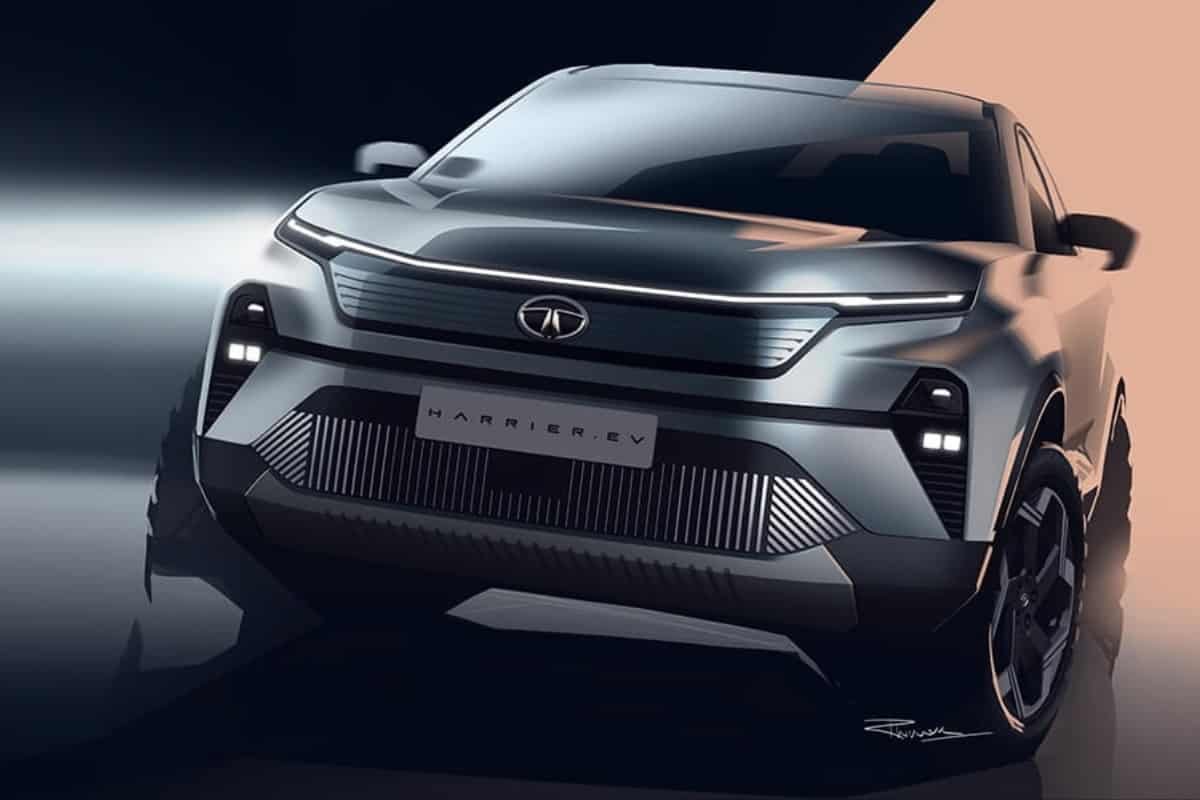
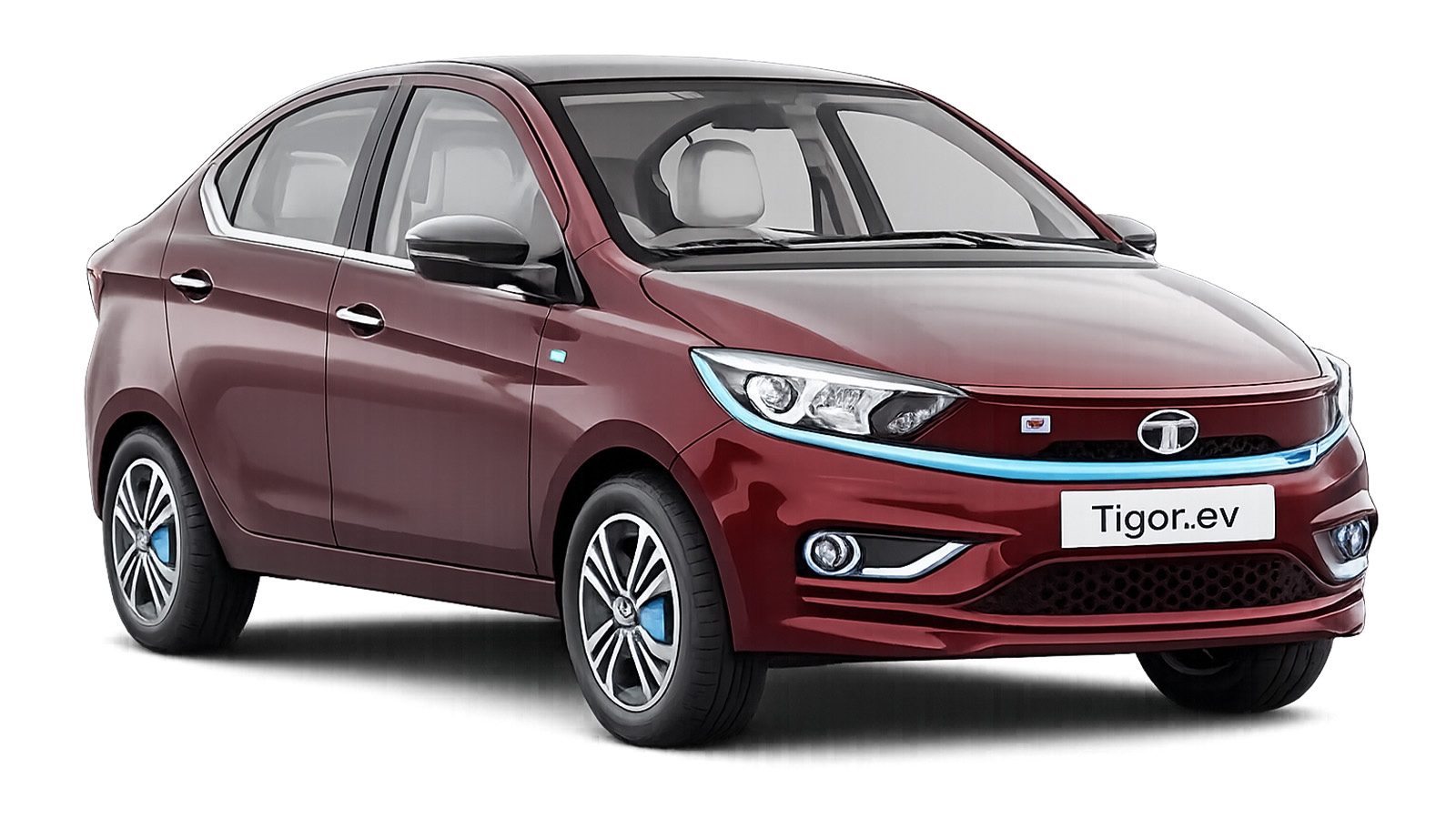
Important note before reading: The Tata Safari EV has not launched at the time of writing (April 2026). Production is confirmed to begin in August 2026 with a festive season launch (October–November 2026). Battery options, variant names, and prices are not officially confirmed. This page covers all credibly confirmed details from Autocar India, Tata Motors statements, and platform analysis. All prices and specs are estimates and will be updated at launch.
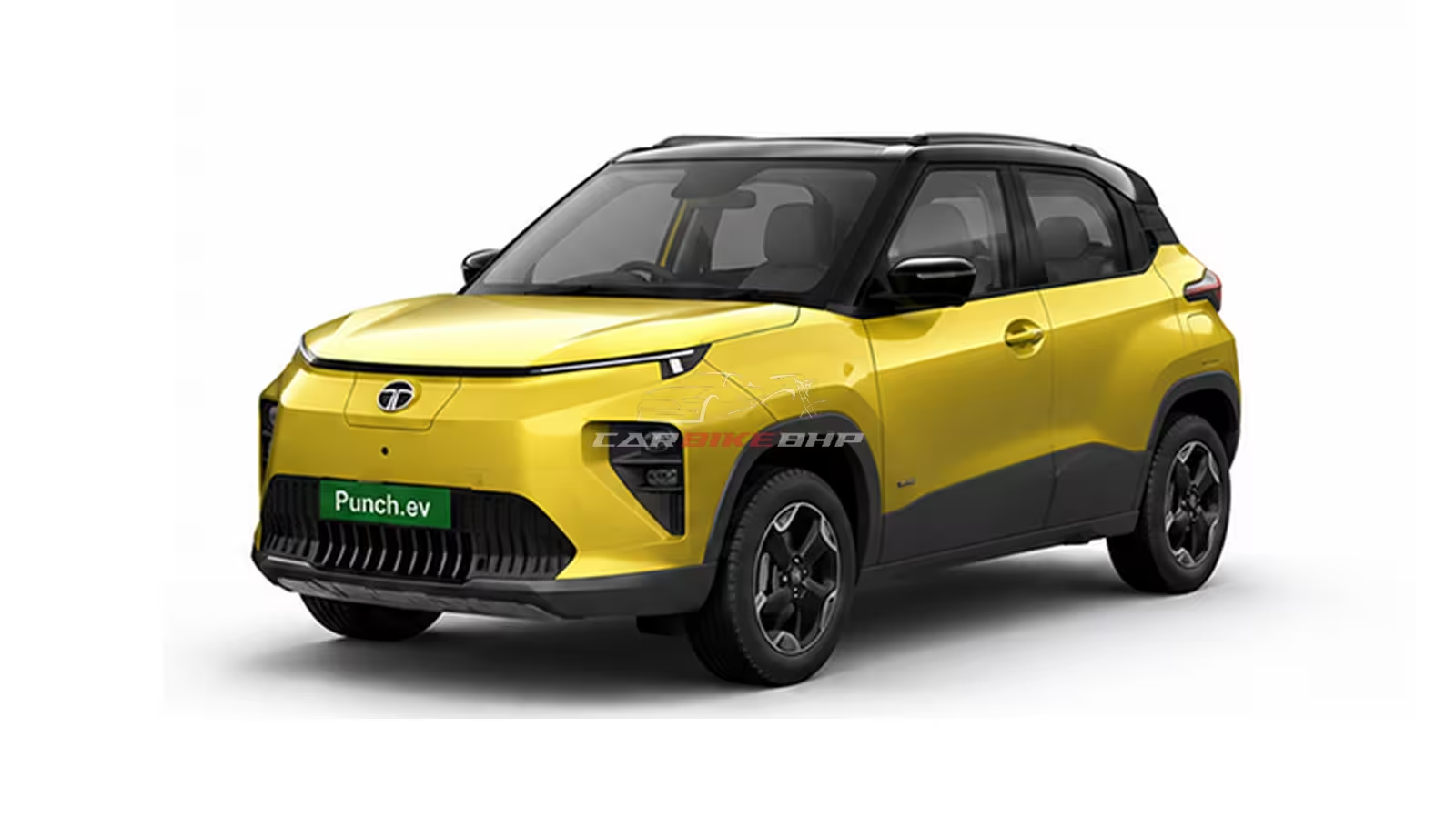
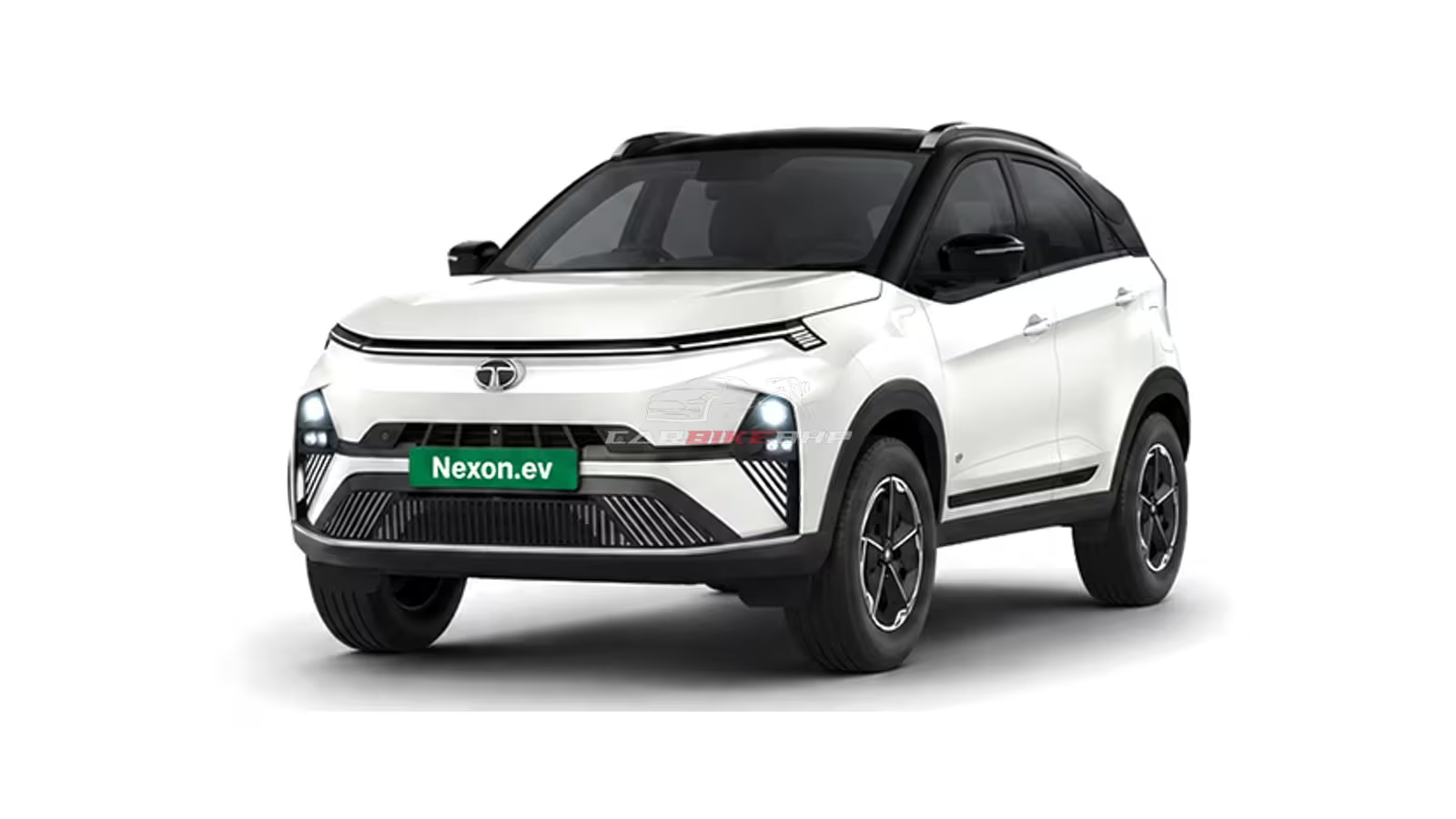
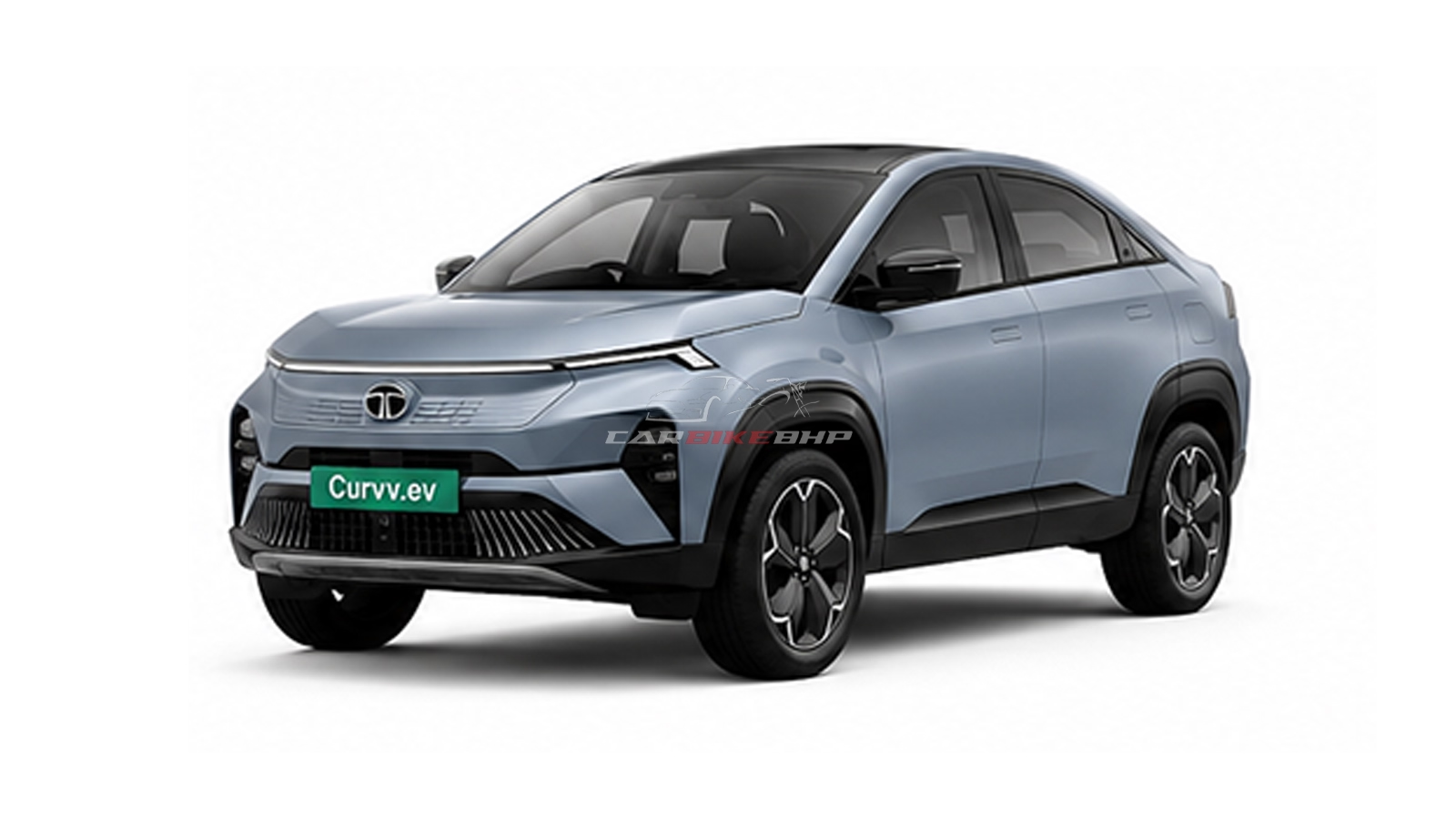
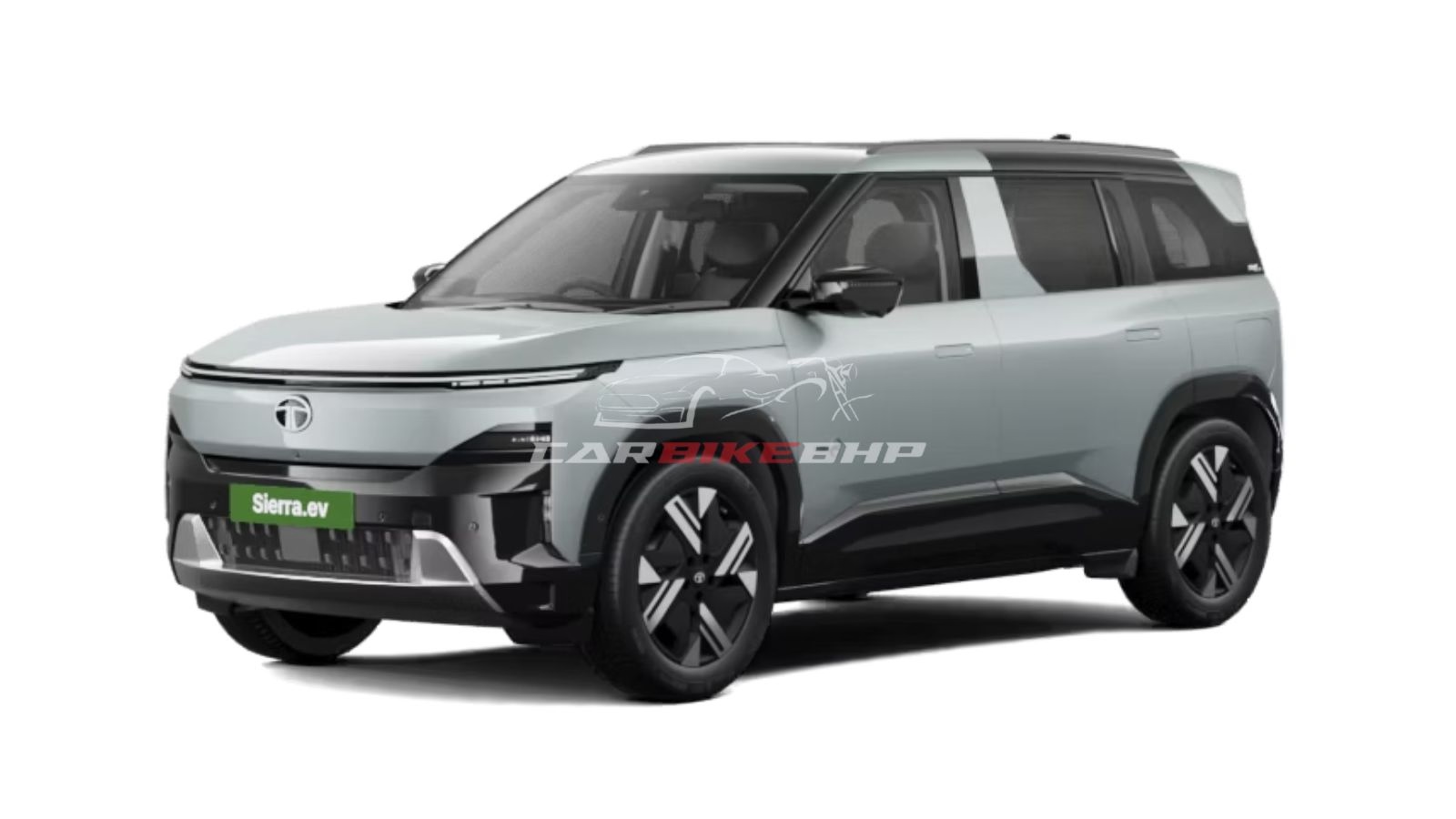
The Tata Safari EV will be India's first three-row electric SUV from a mainstream manufacturer — and the car that completes Tata Motors' remarkable electric transformation. When the Safari EV launches in the 2026 festive season, every current Tata SUV — Nexon, Punch, Curvv, Harrier, and Safari — will be available with an electric powertrain. That is a portfolio achievement no other Indian manufacturer has come close to.
Beyond the milestone, the Safari EV matters for a practical reason: it will be the only electric SUV in India with three rows of seating under ₹35 lakh. For a family that currently owns a diesel Safari and has been waiting for an electric version — or for a buyer who wants the safety and presence of a full-size 7-seater SUV with electric running costs — there is no alternative in the market today. The Mahindra XEV 9S is the closest rival but offers 6 seats and a different body character.
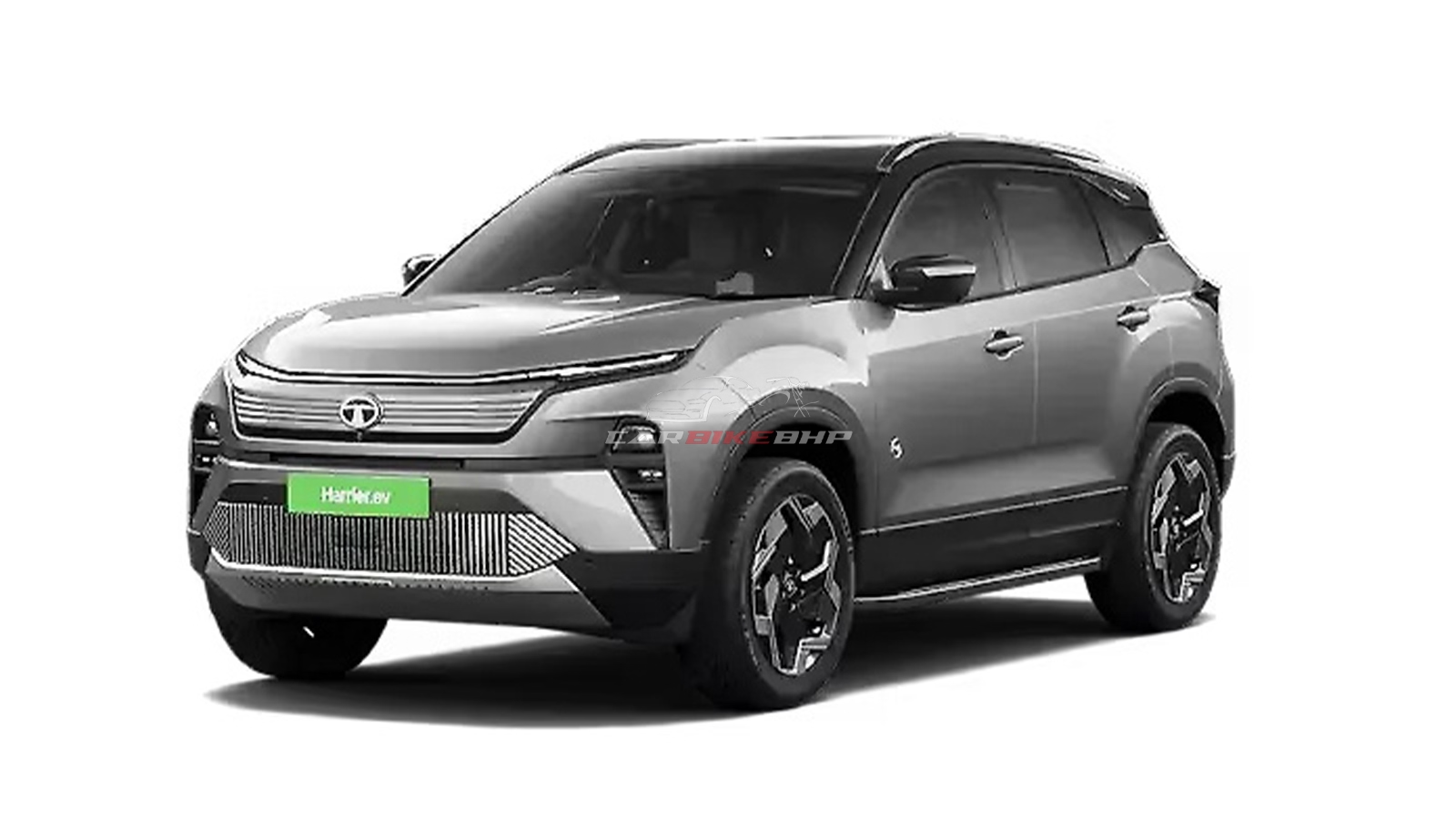
Codenamed Tayrona internally at Tata, the Safari EV shares its Acti.ev+ platform and 65 kWh / 75 kWh battery options with the Harrier EV. This is a platform-sharing strategy — not a born-EV — which allows Tata to bring the product to market faster and at a more competitive price point than if it were developed from a dedicated EV architecture. The Harrier EV has already proven the platform works well; the Safari EV extends that proven engineering into a longer, heavier, three-row body.
Tata Safari EV Expected Price in India 2026
Based on its relationship to the Harrier EV, Autocar India's reporting, and the Mahindra XEV 9S it will rival, the Tata Safari EV price is estimated to start at approximately ₹22.5 lakh and go up to approximately ₹30 lakh (ex-showroom) for the top AWD variant. All figures are estimates until official announcement.
| Expected Variant |
Battery / Drive |
Expected Ex-showroom |
Expected Range |
| Adventure S (Base) |
65 kWh / RWD |
~₹22.50 Lakh |
~490–510 km (MIDC) |
| Fearless |
65 kWh / RWD |
~₹24.50 Lakh |
~490–510 km (MIDC) |
| Fearless+ 75 |
75 kWh / RWD |
~₹26.50 Lakh — expected best value |
~580–600 km (MIDC) |
| Empowered |
75 kWh / RWD |
~₹28.00 Lakh |
~580–600 km (MIDC) |
| Empowered QWD |
75 kWh / AWD |
~₹29.50–30.00 Lakh |
~565–585 km (MIDC) |
All prices and variants are estimates. The Safari EV is heavier than the Harrier EV due to the 7-seat body — range will be marginally lower than the Harrier EV's 538–627 km figures despite sharing the same battery packs. Official figures at launch will confirm this.
What Is Confirmed About the Safari EV
| Detail |
Status |
Source |
| Launch timeline |
Festive season 2026 — confirmed |
Autocar India, April 2026 |
| Production start |
August 2026 — confirmed |
Autocar India, April 2026 |
| Internal codename |
Tayrona — confirmed |
Autocar India |
| Platform |
Acti.ev+ (ICE-to-EV conversion) — confirmed |
Same as Harrier EV |
| Battery options |
65 kWh and 75 kWh — expected |
Platform analysis — same as Harrier EV |
| Seating |
7-seater — confirmed |
Tata's first 3-row electric vehicle |
| AWD option |
Expected on top variant |
Platform supports dual motor |
| TiDAL architecture |
Confirmed — same as Harrier EV |
Enables OTA updates, advanced ADAS, 540-degree camera |
| Rival |
Mahindra XEV 9S — primary rival |
Autocar India, Tata positioning |
| Incremental sales expected |
1,000–1,500 units/month |
Autocar India estimate |
Expected Battery and Motor Specifications
| Specification |
65 kWh RWD (Expected) |
75 kWh RWD (Expected) |
75 kWh QWD (Expected) |
| Battery capacity |
65 kWh |
75 kWh |
75 kWh |
| Motor config |
Single motor, rear |
Single motor, rear |
Dual motor, AWD |
| Expected MIDC range |
~490–510 km |
~580–600 km |
~565–585 km |
| Expected real-world range |
~380–410 km |
~440–470 km |
~420–450 km |
| DC fast charge |
120 kW expected |
120 kW expected |
120 kW expected |
| 20–80% charge time |
~35 min (expected) |
~25 min (expected) |
~25 min (expected) |
| Ground clearance |
~205 mm (expected) |
~205 mm (expected) |
~205 mm (expected) |
Range will be marginally lower than Harrier EV figures because the Safari's longer, heavier 7-seat body adds approximately 150–200 kg over the Harrier EV. This is the same engineering tradeoff seen on every 7-seater versus 5-seater comparison at this size.
Expected Design Changes Over ICE Safari
The Safari EV will not look dramatically different from the ICE Safari. Based on Tata's pattern across the Harrier EV and Nexon EV, the design changes will be purposeful but restrained:
- Closed-off front grille — clean, modern face replacing the chrome-heavy ICE Safari grille
- Illuminated Tata logo on the closed grille — consistent with Harrier EV and Nexon EV
- Full-width connected LED headlamp bar — replacing individual projector headlamps
- Aero-optimised alloy wheels — multi-spoke design reducing drag for range improvement
- No tailpipes — the definitive visual signal of the EV at the rear
- EV-specific badging: Safari EV lettering, variant badges
- Revised front and rear bumpers for improved aerodynamic coefficient
- Overall dimensions remain identical to ICE Safari: 4,661mm length, 1,894mm width, 1,786mm height, 2,741mm wheelbase
Expected Features — What TiDAL Architecture Enables
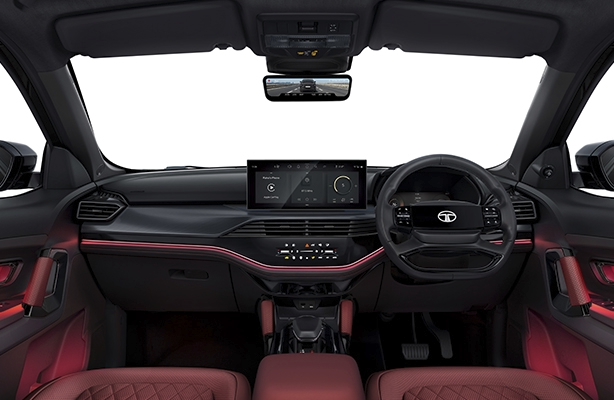
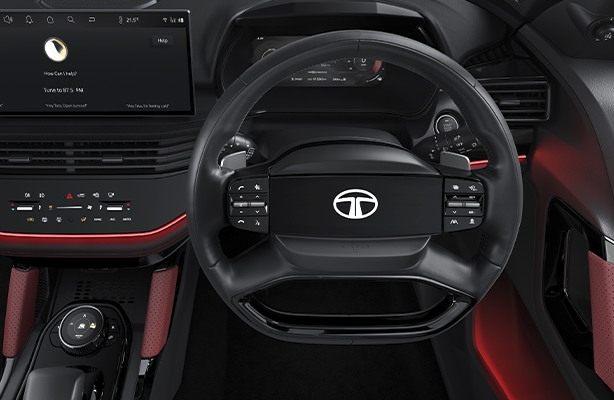
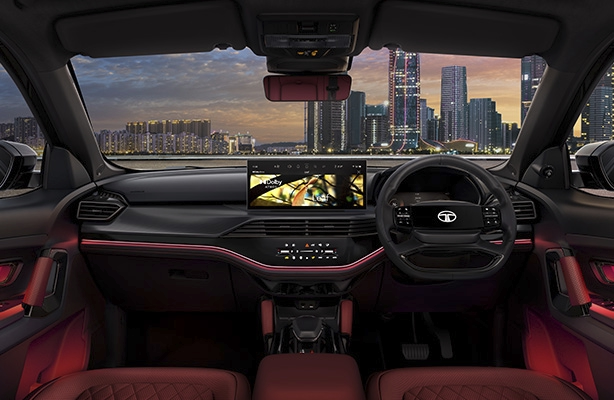
The TiDAL (Tata Intelligent Digital Architecture Layer) electronic architecture introduced on the Harrier EV unlocks a set of features that are not possible on the ICE Safari's older electrical system. The Safari EV is expected to carry all of these:
| Feature |
Likelihood on Safari EV |
Notes |
| 540-degree surround view camera |
Expected — all mid trims up |
Upgrade over Harrier EV's 360-degree system |
| Level 2 ADAS (22 features) |
Expected — top variants |
Same suite as Harrier EV Fearless+ and above |
| OTA updates (multiple ECUs) |
Confirmed — TiDAL platform |
Software improvements post-purchase via Wi-Fi |
| Auto park assist |
Expected on top trim |
New feature not on Harrier EV — enabled by TiDAL |
| Summon mode |
Possible on top trim |
Move car to you via app — useful for tight parking |
| 14.5-inch QLED touchscreen |
Expected — mid trims up |
Same Samsung display as Harrier EV |
| Dolby Atmos audio |
Expected — top variants |
Standard on Harrier EV Fearless+ |
| Terrain modes (6 modes) |
Expected — confirmed via platform |
Normal, Snow/Grass, Mud-Ruts, Sand, Rock Crawl, Custom |
| V2L (Vehicle-to-Load) |
Expected — mid trims up |
Power appliances from car battery — 3.3 kW |
| 7 airbags |
Expected standard — all variants |
Standard on Harrier EV across all trims |
| Frequency-dependent dampers |
Expected — confirmed via platform |
Harrier EV Accomplished and above; Safari EV expected same |
| Panoramic sunroof |
Expected — mid trims up |
ICE Safari has panoramic sunroof; EV expected same |
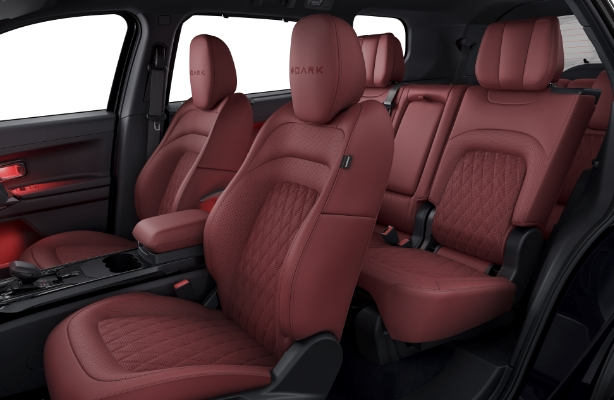
| Ventilated front and rear seats |
Expected on top variants |
ICE Safari has ventilated front seats; EV may extend to rear |
Tata Safari EV vs Mahindra XEV 9S
This is the comparison every buyer considering the Safari EV will make. The XEV 9S has not launched at the time of writing — both cars are expected in the second half of 2026.
| Feature |
Safari EV (Expected) |
Mahindra XEV 9S (Expected) |
| Seating |
7 seats ★ |
6 seats |
| Platform type |
ICE-to-EV (Acti.ev+) |
INGLO (born-EV platform) |
| Expected battery |
65 kWh / 75 kWh |
~79 kWh (expected) |
| DC fast charge speed |
~120 kW |
~175 kW (expected) ★ |
| AWD option |
Yes — top variant ★ |
Yes |
| Service network |
600+ Tata touchpoints ★ |
~350 Mahindra EV-capable |
| Expected starting price |
~₹22.50 lakh ★ |
~₹25–28 lakh (expected) |
| Terrain modes |
6 modes including Rock Crawl ★ |
Expected but not confirmed |
Why the Safari EV Is Historically Significant
The original Tata Safari launched in 1998 as India's first indigenous SUV — a car that proved an Indian manufacturer could build a proper off-road-capable vehicle. The Safari nameplate has held its position through three major body redesigns over 26 years.
The Safari EV marks the fourth transformation — and the most significant. When it launches in October–November 2026, it will be the first time in Indian automotive history that a three-row family SUV with domestic brand heritage is available as a zero-emission vehicle at a mainstream price point. No import — the BYD eMAX 7 exists but at ₹32+ lakh with limited service network — offers this combination of size, three rows, Indian-market service confidence, and competitive pricing.
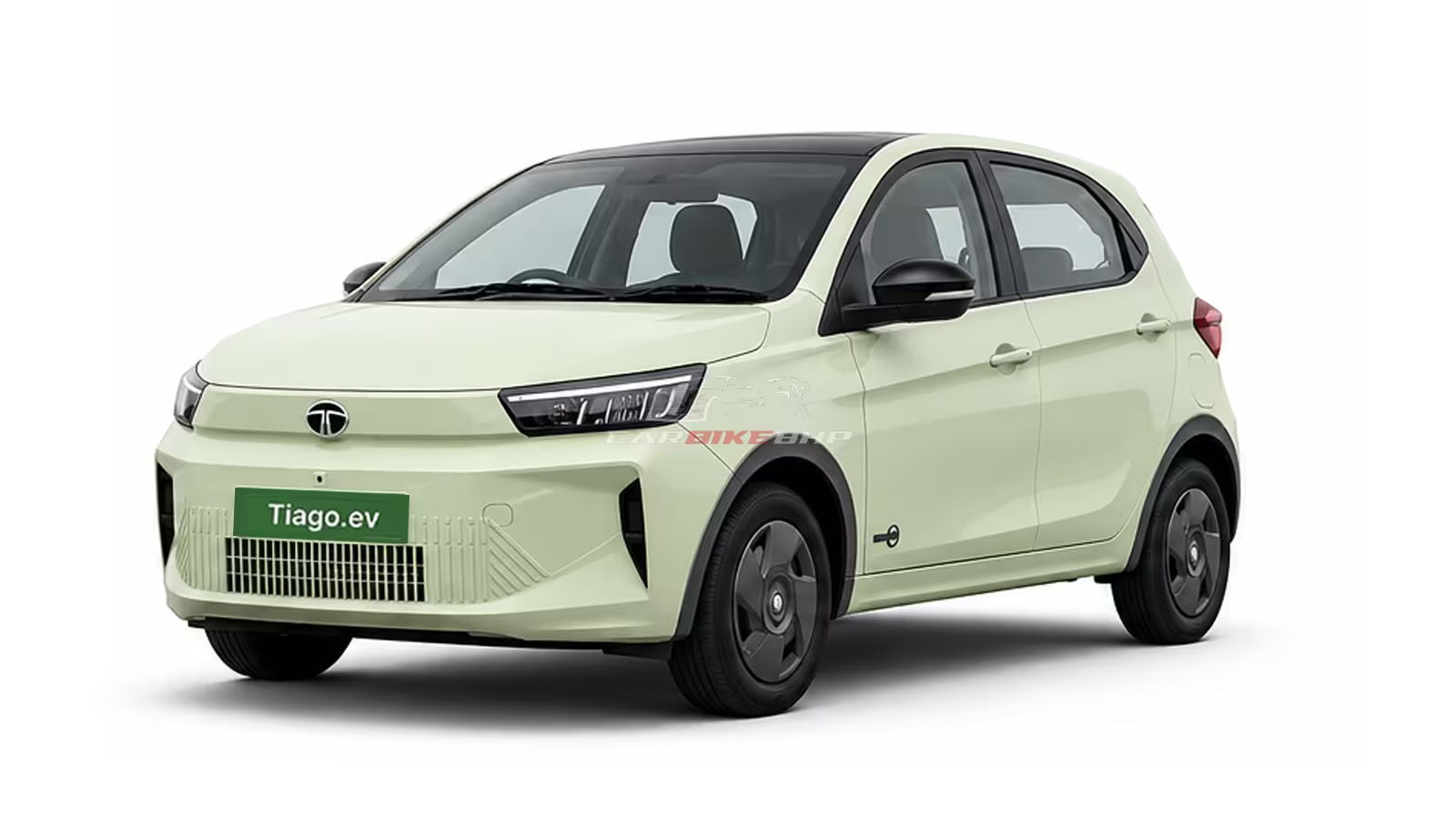
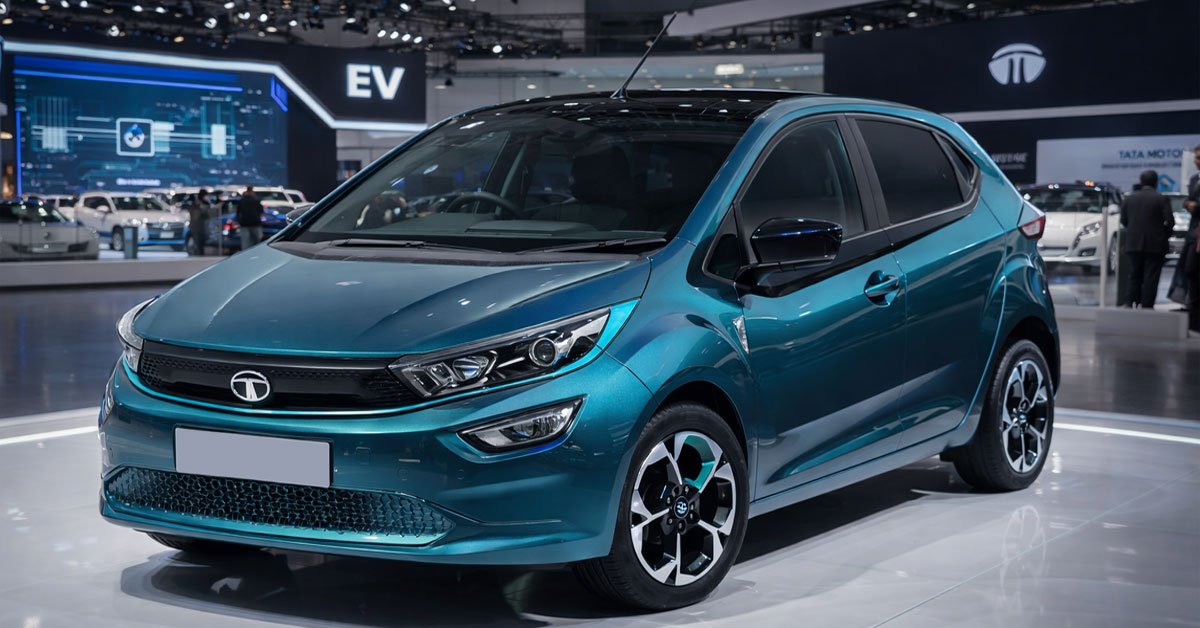
For Tata Motors specifically, the Safari EV completes a portfolio transformation that began with the Nexon EV in 2020. In six years, Tata has gone from one electric product to a complete lineup spanning ₹8 lakh (Tiago EV) to ₹30 lakh (Safari EV). The Safari EV is the capstone of that story.
Should You Wait for the Tata Safari EV?
Wait for the Safari EV if you need three rows of seating in an electric vehicle and your budget is under ₹35 lakh. Nothing else in the Indian market delivers this. Also wait if you are a current diesel Safari owner who has been waiting for an electric version — the body is familiar, the service network is the same 600+ Tata touchpoints, and the platform engineering is already proven on the Harrier EV. Production starts August 2026, so festive season availability (October–November) is realistic.
Do not wait if you need a car before October 2026 — buy the Harrier EV now. The Harrier EV is essentially the same powertrain in a 5-seater body, available today from ₹21.49 lakh with confirmed pricing and tested real-world performance. If five seats are sufficient for your family, there is no reason to wait. Also do not wait if DC fast charging speed is critical — the Safari EV's expected 120 kW maximum is half the speed of the Mahindra XEV 9S's expected 175 kW at highway DC chargers.
This page covers the Tata Safari EV as a confirmed-but-unlaunched upcoming model. Production begins August 2026, launch expected festive season 2026. All prices, variant names, and specifications will be confirmed at the official launch event and updated immediately on this page.